Dream interpretation
Dream interpretation is the process of assigning meaning to dreams. In many ancient societies, such as those of Egypt and Greece, dreaming was considered a supernatural communication or a means of divine intervention, whose message could be interpreted by people with these associated spiritual powers.
History[edit]
In the ancient world, dreams were seen as messages from the gods. The Ancient Egyptians believed that dreams were like oracles, bringing messages from the gods. They thought that the best way to receive divine revelation was through dreaming and thus they would induce (or "incubate") dreams. Egyptians would go to sanctuaries and sleep on special "dream beds" in hope of receiving advice, comfort, or healing from the gods.
Modern interpretations[edit]
In modern times, various schools of psychology and neurobiology have offered theories about the meaning and purpose of dreams. Most people currently appear to interpret dream content according to the "Freudian" theory of dreams in countries, as found by a study conducted in the United States, India, and South Korea.
Freudian interpretation[edit]
Sigmund Freud (1856–1939), who developed the discipline of psychoanalysis, wrote extensively about dream theories and their interpretations. He explained dreams as manifestations of one's deepest desires and anxieties, often relating to repressed childhood memories or obsessions.
Jungian interpretation[edit]
In contrast to Freud, Carl Jung (1875–1961), a Swiss psychiatrist and psychotherapist, believed that dreams might contain ineluctable truths, philosophical pronouncements, illusions, wild fantasies, memories, plans, irrational experiences and even telepathic visions.
See also[edit]
References[edit]

This WikiMD article can only be edited by registered and verified editors. You can log in or register.
Dream_interpretation[edit]
-
 Dream_interpretation
 -
 Tablet V of the Epic of Gilgamesh
 -
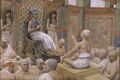 Joseph Interprets Pharaoh's Dream


Advertise on WikiMD — 81,000+ full articles, ~900,000 total pages, ~250 million page views. Global reach, limited time promotional rates from $1/page/day. Learn more · View stats

Translate page: - East Asian
中文,
日本,
한국어,
South Asian
हिन्दी,
தமிழ்,
తెలుగు,
Urdu,
ಕನ್ನಡ,
Southeast Asian
Indonesian,
Vietnamese,
Thai,
မြန်မာဘာသာ,
বাংলা
European
español,
Deutsch,
français,
Greek,
português do Brasil,
polski,
română,
русский,
Nederlands,
norsk,
svenska,
suomi,
Italian
Middle Eastern & African
عربى,
Turkish,
Persian,
Hebrew,
Afrikaans,
isiZulu,
Kiswahili,
Other
Bulgarian,
Hungarian,
Czech,
Swedish,
മലയാളം,
मराठी,
ਪੰਜਾਬੀ,
ગુજરાતી,
Portuguese,
Ukrainian
About WikiMD • Contact • Disclaimer • Privacy • Copyright • Site statistics
Some content and images may originate from Wikimedia Commons or Wikipedia and remain subject to their stated licenses. Unless otherwise noted, eligible WikiMD content is available under CC BY-SA 4.0.
WikiMD Wellnesspedia — Free health & wellness information for patients, students, and health professionals.

