Human physiology of underwater diving
Human physiology of underwater diving is the physiological influence of the underwater environment on the human diver, and adaptations to operating underwater, both during breath-hold dives and while breathing at ambient pressure from a suitable breathing gas supply. It, therefore, includes the range of physiological effects generally limited to human ambient pressure divers either freediving or using underwater breathing apparatus. Several factors influence the diver, including immersion, exposure to the water, the limitations of breath-hold endurance, variations in ambient pressure, the effects of breathing gases at raised ambient pressure, effects caused by the use of diving equipment, and the psychological effects of the underwater environment.
Immersion[edit]
Immersion in water and exposure to cold water and high pressure have physiological effects on the diver which limit the depths and duration possible in ambient pressure diving. Immersion affects fluid balance, circulation and work of breathing.
Exposure to cold water[edit]
Exposure to cold water can result in the harmful cold shock response or the beneficial diving reflex. The diving reflex optimizes respiration which can be advantageous for extending breath-hold time.
Breath-hold limitations[edit]
Breath-hold diving by an untrained diver is limited to depths of about 40 meters (130 ft), beyond which vertigo may occur, and nitrogen narcosis becomes a significant hazard for those who breath-hold dive at depths greater.
Variations in ambient pressure[edit]
Variations in ambient pressure can lead to barotrauma and decompression sickness. The use of breathing apparatus allows the diver to stay underwater longer, at greater depths, but the high pressure environment has several effects on the physiology.
Breathing gases at raised ambient pressure[edit]
Breathing gases at raised ambient pressure has an effect on the diver's physiology. The effects of breathing gases under pressure are increased with depth.
Diving equipment[edit]
The use of diving equipment also has physiological effects on the diver, primarily associated with the breathing apparatus.
Psychological effects[edit]
The underwater environment can be psychologically stressful to the diver, and the physiological effects of this stress can be significant, particularly in an emergency.
See also[edit]

This WikiMD article can only be edited by registered and verified editors. You can log in or register.
-
 Navy Diver 3rd Class Kurt Eberle waits for a tool bag before he begins a dive project.
 -
 Diver about to surface (seen from below).
 -
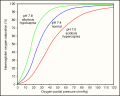 Oxygen-Haemoglobin dissociation curves.
 -
 Gas blending equipment.
 -
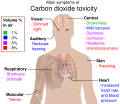 Main symptoms of carbon dioxide toxicity.
 -
 Breathing resistance.
 -
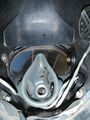 Inside a KM37 diving helmet.
.jpg)
.jpg)


Advertise on WikiMD — 81,000+ full articles, ~900,000 total pages, ~250 million page views. Global reach, limited time promotional rates from $1/page/day. Learn more · View stats


Translate page: - East Asian
中文,
日本,
한국어,
South Asian
हिन्दी,
தமிழ்,
తెలుగు,
Urdu,
ಕನ್ನಡ,
Southeast Asian
Indonesian,
Vietnamese,
Thai,
မြန်မာဘာသာ,
বাংলা
European
español,
Deutsch,
français,
Greek,
português do Brasil,
polski,
română,
русский,
Nederlands,
norsk,
svenska,
suomi,
Italian
Middle Eastern & African
عربى,
Turkish,
Persian,
Hebrew,
Afrikaans,
isiZulu,
Kiswahili,
Other
Bulgarian,
Hungarian,
Czech,
Swedish,
മലയാളം,
मराठी,
ਪੰਜਾਬੀ,
ગુજરાતી,
Portuguese,
Ukrainian
About WikiMD • Contact • Disclaimer • Privacy • Copyright • Site statistics
Some content and images may originate from Wikimedia Commons or Wikipedia and remain subject to their stated licenses. Unless otherwise noted, eligible WikiMD content is available under CC BY-SA 4.0.
WikiMD Wellnesspedia — Free health & wellness information for patients, students, and health professionals.

