Desoxypipradrol
Desoxypipradrol (also known as 2-DPMP, 2-diphenylmethylpiperidine, or 2-benzhydrylpiperidine) is a stimulant drug of the piperidine class. It was developed in the 1950s by the pharmaceutical company CIBA (now Novartis) as a potential treatment for narcolepsy and ADHD, but was never commercially marketed.
Chemistry[edit]
Desoxypipradrol is a synthetic compound of the piperidine class. The chemical structure consists of a piperidine ring, which is a six-membered ring with one nitrogen atom and five carbon atoms, substituted at the 2 position with a diphenylmethyl group.
Pharmacology[edit]
Desoxypipradrol acts as a norepinephrine-dopamine reuptake inhibitor (NDRI), meaning it increases the levels of the norepinephrine and dopamine neurotransmitters in the brain by inhibiting their reuptake into neurons. This results in increased neuronal activity, which can lead to increased alertness and wakefulness.
Effects[edit]
The effects of desoxypipradrol can vary greatly depending on the dose and individual's physiology. At lower doses, it can produce effects such as increased alertness, wakefulness, and focus. At higher doses, it can cause effects such as restlessness, insomnia, and increased heart rate.
Legal Status[edit]
Desoxypipradrol is a controlled substance in many countries due to its potential for abuse and addiction. In the United States, it is classified as a Schedule I drug under the Controlled Substances Act.
See Also[edit]
References[edit]
 | This medical article is a stub. You can help WikiMD by expanding the page. |
Desoxypipradrol[edit]
-
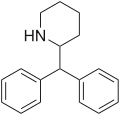 Chemical structure of Desoxypipradrol
 -
 3D model of Desoxypipradrol


Medical Disclaimer: WikiMD is for informational purposes only and is not a substitute for professional medical advice. Content may be inaccurate or outdated and should not be used for diagnosis or treatment. Always consult your healthcare provider for medical decisions. Verify information with trusted sources such as CDC.gov and NIH.gov. By using this site, you agree that WikiMD is not liable for any outcomes related to its content. See full disclaimer.
Credits:Most images are courtesy of Wikimedia commons, and templates, categories Wikipedia, licensed under CC BY SA or similar.
Translate page: - East Asian
中文,
日本,
한국어,
South Asian
हिन्दी,
தமிழ்,
తెలుగు,
Urdu,
ಕನ್ನಡ,
Southeast Asian
Indonesian,
Vietnamese,
Thai,
မြန်မာဘာသာ,
বাংলা
European
español,
Deutsch,
français,
Greek,
português do Brasil,
polski,
română,
русский,
Nederlands,
norsk,
svenska,
suomi,
Italian
Middle Eastern & African
عربى,
Turkish,
Persian,
Hebrew,
Afrikaans,
isiZulu,
Kiswahili,
Other
Bulgarian,
Hungarian,
Czech,
Swedish,
മലയാളം,
मराठी,
ਪੰਜਾਬੀ,
ગુજરાતી,
Portuguese,
Ukrainian

