Delicacy
Delicacy is a term often used in the context of gastronomy to refer to a food item that is considered highly desirable in certain cultures. The term is subjective and can vary greatly from one culture to another. What may be a delicacy in one culture may be considered commonplace or even unappetizing in another.
Definition[edit]
A delicacy is a food item that is considered highly desirable in certain cultures. Often, these foods are also associated with a high level of culinary skill and/or a unique, exotic flavor. Delicacies are often considered to be a symbol of wealth and social status, as they are often expensive and not readily available to the general public.
Cultural Variations[edit]
Different cultures have different foods that they consider to be delicacies. For example, in China, bird's nest soup is considered a delicacy, while in France, foie gras is highly prized. In Japan, fugu, or pufferfish, is considered a delicacy despite its potential lethality if not prepared correctly.
Factors Influencing Delicacy Status[edit]
Several factors can influence whether a food is considered a delicacy. These can include the rarity of the food, the difficulty in preparing it, its unique flavor or texture, and cultural traditions or beliefs associated with the food.
Examples of Delicacies[edit]
Some examples of delicacies from around the world include:
- Caviar: This is a delicacy in many cultures, made from the roe of sturgeon fish. It is often served on small, blini pancakes with sour cream.
- Truffles: These are a type of fungus that grows underground, often found in France and Italy. They are highly prized for their unique flavor and aroma.
- Bird's Nest Soup: This is a delicacy in Chinese cuisine, made from the nests of swiftlet birds, which are made from the bird's saliva.
- Fugu: This is a Japanese delicacy made from pufferfish. It is highly toxic if not prepared correctly, and can only be prepared by licensed chefs.
See Also[edit]

This WikiMD article can only be edited by registered and verified editors. You can log in or register.
-
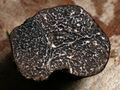 Truffle
 -
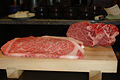 Kobe Beef
 -
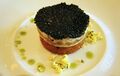 Ossetra Caviar
 -
Peking Duck


Medical Disclaimer: WikiMD is for informational purposes only and is not a substitute for professional medical advice. Content may be inaccurate or outdated and should not be used for diagnosis or treatment. Always consult your healthcare provider for medical decisions. Verify information with trusted sources such as CDC.gov and NIH.gov. By using this site, you agree that WikiMD is not liable for any outcomes related to its content. See full disclaimer.
Credits:Most images are courtesy of Wikimedia commons, and templates, categories Wikipedia, licensed under CC BY SA or similar.
Translate page: - East Asian
中文,
日本,
한국어,
South Asian
हिन्दी,
தமிழ்,
తెలుగు,
Urdu,
ಕನ್ನಡ,
Southeast Asian
Indonesian,
Vietnamese,
Thai,
မြန်မာဘာသာ,
বাংলা
European
español,
Deutsch,
français,
Greek,
português do Brasil,
polski,
română,
русский,
Nederlands,
norsk,
svenska,
suomi,
Italian
Middle Eastern & African
عربى,
Turkish,
Persian,
Hebrew,
Afrikaans,
isiZulu,
Kiswahili,
Other
Bulgarian,
Hungarian,
Czech,
Swedish,
മലയാളം,
मराठी,
ਪੰਜਾਬੀ,
ગુજરાતી,
Portuguese,
Ukrainian


