Sociology of food
Sociology of Food is a subfield of sociology that focuses on the social aspects of food and nutrition. It examines the role of food in human social life, including its production, distribution, consumption, and cultural significance.
Overview[edit]
The sociology of food is an interdisciplinary field that draws on theories and methods from both classical and contemporary sociology. It explores the social relations and systems that shape the production, distribution, and consumption of food. This includes the study of food systems, food cultures, and the social and cultural meanings of food.
Food Systems[edit]
Food systems in the sociology of food refer to the processes and infrastructure involved in feeding a population. This includes the cultivation, harvesting, processing, packaging, distribution, and consumption of food. Sociologists examine these systems to understand the social, economic, and political forces that shape them.
Food Cultures[edit]
Food culture is a central concept in the sociology of food. It refers to the practices, attitudes, and beliefs surrounding the consumption of food. This includes food preferences, eating habits, and culinary traditions. Sociologists study food cultures to understand how they reflect and shape social identities, relationships, and hierarchies.
Social and Cultural Meanings of Food[edit]
The sociology of food also explores the social and cultural meanings of food. This includes the symbolic value of food, its role in social rituals, and its significance in cultural identity. Food can serve as a symbol of social status, a marker of cultural belonging, and a medium for social interaction.
See Also[edit]
References[edit]
 | This sociology-related article is a stub. You can help WikiMD by expanding the page. |

-
Sociology of food
-
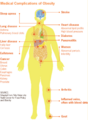 Medical complications of obesity


Medical Disclaimer: WikiMD is for informational purposes only and is not a substitute for professional medical advice. Content may be inaccurate or outdated and should not be used for diagnosis or treatment. Always consult your healthcare provider for medical decisions. Verify information with trusted sources such as CDC.gov and NIH.gov. By using this site, you agree that WikiMD is not liable for any outcomes related to its content. See full disclaimer.
Credits:Most images are courtesy of Wikimedia commons, and templates, categories Wikipedia, licensed under CC BY SA or similar.
Translate page: - East Asian
中文,
日本,
한국어,
South Asian
हिन्दी,
தமிழ்,
తెలుగు,
Urdu,
ಕನ್ನಡ,
Southeast Asian
Indonesian,
Vietnamese,
Thai,
မြန်မာဘာသာ,
বাংলা
European
español,
Deutsch,
français,
Greek,
português do Brasil,
polski,
română,
русский,
Nederlands,
norsk,
svenska,
suomi,
Italian
Middle Eastern & African
عربى,
Turkish,
Persian,
Hebrew,
Afrikaans,
isiZulu,
Kiswahili,
Other
Bulgarian,
Hungarian,
Czech,
Swedish,
മലയാളം,
मराठी,
ਪੰਜਾਬੀ,
ગુજરાતી,
Portuguese,
Ukrainian


