Cytochrome c oxidase subunit I
Cytochrome c oxidase subunit I (COI or COX1) is a protein that in humans is encoded by the MT-CO1 gene. It is a subunit of the enzyme cytochrome c oxidase (complex IV), which is the last enzyme in the mitochondrial electron transport chain of mitochondria.
Function[edit]
COX1 is one of the three mitochondrial DNA (mtDNA)-encoded subunits of cytochrome c oxidase. Cytochrome c oxidase is the terminal enzyme of the mitochondrial respiratory chain that catalyzes the reduction of oxygen to water. Subunits 1-3 form the functional core of the enzyme complex. COX1, the largest subunit, forms the mitochondrial proton channel, and its polypeptide folds into a transmembrane helix that forms the core of the proton pump.
Clinical significance[edit]
Mutations in the MT-CO1 gene are associated with a variety of human diseases, including Leber's hereditary optic neuropathy, mitochondrial encephalomyopathy, lactic acidosis, and stroke-like episodes (MELAS), and myoclonic epilepsy with ragged-red fibers (MERRF).
See also[edit]
References[edit]
External links[edit]
 | This medical article is a stub. You can help WikiMD by expanding the page. |
Cytochrome c oxidase subunit I[edit]
-
 PDB 1occ EBI
 -
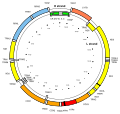 Map of the human mitochondrial genome
 -
 Colonic crypts within four tissue sections


Medical Disclaimer: WikiMD is for informational purposes only and is not a substitute for professional medical advice. Content may be inaccurate or outdated and should not be used for diagnosis or treatment. Always consult your healthcare provider for medical decisions. Verify information with trusted sources such as CDC.gov and NIH.gov. By using this site, you agree that WikiMD is not liable for any outcomes related to its content. See full disclaimer.
Credits:Most images are courtesy of Wikimedia commons, and templates, categories Wikipedia, licensed under CC BY SA or similar.
Translate page: - East Asian
中文,
日本,
한국어,
South Asian
हिन्दी,
தமிழ்,
తెలుగు,
Urdu,
ಕನ್ನಡ,
Southeast Asian
Indonesian,
Vietnamese,
Thai,
မြန်မာဘာသာ,
বাংলা
European
español,
Deutsch,
français,
Greek,
português do Brasil,
polski,
română,
русский,
Nederlands,
norsk,
svenska,
suomi,
Italian
Middle Eastern & African
عربى,
Turkish,
Persian,
Hebrew,
Afrikaans,
isiZulu,
Kiswahili,
Other
Bulgarian,
Hungarian,
Czech,
Swedish,
മലയാളം,
मराठी,
ਪੰਜਾਬੀ,
ગુજરાતી,
Portuguese,
Ukrainian

