Cystoscopy
Cystoscopy is a diagnostic procedure that allows a doctor to examine the lining of the bladder and the tube that carries urine out of the body (urethra). A hollow tube (cystoscope) equipped with a lens is inserted into the urethra and slowly advanced into the bladder.
Procedure[edit]
Cystoscopy can be performed in a testing room, operating room or a doctor's office. The procedure can be done under local, regional or general anesthesia. The type of anesthesia depends on the reason for cystoscopy. The procedure can be performed in two ways:
- Flexible cystoscopy: This procedure uses a thin, flexible cystoscope. It is less likely to cause discomfort or pain.
- Rigid cystoscopy: This procedure uses a wider, rigid cystoscope. It is generally used for men and allows the doctor to perform additional procedures, such as removing a bladder stone.
Uses[edit]
Cystoscopy is used to diagnose, monitor and treat conditions affecting the bladder and urethra. It can be used to:
- Investigate causes of symptoms such as blood in the urine (hematuria), frequent urinary tract infections, incontinence, persistent pelvic pain, or urinary blockage.
- Diagnose bladder diseases and conditions.
- Treat bladder diseases and conditions.
Risks[edit]
Cystoscopy carries a risk of complications, which may include:
- Infection
- Bleeding
- Bladder wall damage
- Conditions related to the anesthesia
Preparation[edit]
Before a cystoscopy, patients should inform their doctor about any medications they're taking, as well as any allergies. They may need to stop taking certain medications before the procedure.
After the procedure[edit]
After a cystoscopy, it's normal to have a burning sensation while urinating and see small amounts of blood in the urine. Drinking plenty of water can help reduce these symptoms.

This WikiMD article can only be edited by registered and verified editors. You can log in or register.
-
Diagram showing a cystoscopy for a man and a woman
-
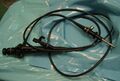 Cystoscope
 -
Cystoscopy


Medical Disclaimer: WikiMD is for informational purposes only and is not a substitute for professional medical advice. Content may be inaccurate or outdated and should not be used for diagnosis or treatment. Always consult your healthcare provider for medical decisions. Verify information with trusted sources such as CDC.gov and NIH.gov. By using this site, you agree that WikiMD is not liable for any outcomes related to its content. See full disclaimer.
Credits:Most images are courtesy of Wikimedia commons, and templates, categories Wikipedia, licensed under CC BY SA or similar.
Translate page: - East Asian
中文,
日本,
한국어,
South Asian
हिन्दी,
தமிழ்,
తెలుగు,
Urdu,
ಕನ್ನಡ,
Southeast Asian
Indonesian,
Vietnamese,
Thai,
မြန်မာဘာသာ,
বাংলা
European
español,
Deutsch,
français,
Greek,
português do Brasil,
polski,
română,
русский,
Nederlands,
norsk,
svenska,
suomi,
Italian
Middle Eastern & African
عربى,
Turkish,
Persian,
Hebrew,
Afrikaans,
isiZulu,
Kiswahili,
Other
Bulgarian,
Hungarian,
Czech,
Swedish,
മലയാളം,
मराठी,
ਪੰਜਾਬੀ,
ગુજરાતી,
Portuguese,
Ukrainian


