Culture
Culture encompasses the social behavior, norms, knowledge, beliefs, arts, laws, customs, capabilities, and habits of the individuals in these groups. It is considered a central concept in anthropology, encompassing the range of phenomena that are transmitted through social learning in human societies. Cultural patterns give an identity to a society and contribute to the legacy of knowledge, tradition, and experiences passed down through generations.
Definition and Overview[edit]
The term "culture" derives from the Latin cultura stemming from colere, meaning "to cultivate". The term was first used in its current sense by the English anthropologist Edward B. Tylor in his book, Primitive Culture (1871). Tylor defined culture as "that complex whole which includes knowledge, belief, art, morals, law, custom, and any other capabilities and habits acquired by man as a member of society."
Characteristics[edit]
Culture is made up of many complex elements, including:
- Religion and Beliefs: Systems of faith and worship form the major part of many cultures.
- Social structure: The way a society is organized, including roles and responsibilities of individuals within the society.
- Language: Language is the means of communication within a group, and varies immensely from culture to culture.
- Art and Craft: Different forms of expression which are considered an integral part of culture.
- Customs and Traditions: These are specific practices followed by the people of a particular cultural group.
- Technology and Material Culture: This includes all the physical objects and the techniques used to create and use them.
Cultural Universals[edit]
Anthropologist George Murdock first recognized the existence of cultural universals while studying systems of kinship around the world. Cultural universals are elements, patterns, traits, or institutions that are common to all human cultures worldwide. Examples include cooking, the family, personal names, and the state.
Cultural Variation[edit]
Cultural variation exists both across and within societies. It can be influenced by a variety of factors including:
- Geography: The physical environment and terrain of a region.
- History: Historical events shape cultural development and influence societal structures and beliefs.
- Economics: Economic conditions greatly influence the culture of a society.
- Politics: Political systems and beliefs play a role in shaping culture.
Cultural Change[edit]
Culture is not static; it evolves over time. Changes in culture can result from invention, innovation, and contact with other cultures. Cultural change can also be influenced by technology, new ideas, and environmental changes.
Study of Culture[edit]
The study of culture is a central theme in anthropology. Disciplines such as cultural anthropology, sociology, cultural studies, and intercultural communication are specifically geared towards understanding the nuances of culture and its impact on human behavior and social structures.
Conclusion[edit]
Culture is a complex and dynamic force that shapes the way individuals perceive the world and interact within it. Understanding cultural differences is crucial in today's globalized world, as it affects international relations, business practices, and social interactions.
 | This culture-related article is a stub. You can help WikiMD by expanding the page. |
-
 Bisonte Magdaleniense polícromo
 -
 Sri Mariamman Gopuram
 -
 Volksfestumzug in Vilshofen
 -
 Fulani traditional marriage
 -
 Pygmy Drummers
 -
 The Beatles 1965
 -
 Indigenous People
 -
 Gorskii Photograph
 -
 Johann Gottfried Herder
 -
 Adolf Bastian
 -
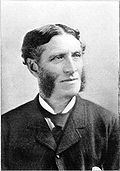 Matthew Arnold
 -
 Edward Burnett Tylor


.JPG)

_-_Pygmy_Drummers.jpg)


Sponsored Health Resource

W8MD Weight Loss, Sleep & MedSpa
Looking for physician-supervised weight loss, semaglutide, tirzepatide, or GLP-1 receptor agonist options? W8MD helps eligible patients in New York City, Brooklyn, New Jersey, Connecticut, Pennsylvania, Delaware, and greater Philadelphia with medical weight loss, sleep medicine, and long-term maintenance support.
GLP-1 specials: Affordable GLP-1 injections NYC and Philadelphia starting from $29.99/week and up for semaglutide with insurance accepted for qualifying visits, and $45/week and up for tirzepatide with insurance accepted for qualifying visits. Self-pay options start from $59.99/week and up for semaglutide and $69.99/week and up for tirzepatide.
Medical weight loss NYC | Affordable GLP-1 injections NYC | Budget GLP-1 weight loss shots Philadelphia | New Jersey medical weight loss | NYC medical weight loss | Philadelphia medical weight loss | Sleep clinic NYC | W8MD's Philadelphia GLP-1 doctor | Weight loss prescriptions NYC
Book a W8MD appointment · View GLP-1 specials
Paid promotional message. Eligibility, pricing, insurance coverage, medication availability, and results vary. Medical evaluation required.

Medical Disclaimer: WikiMD is for informational purposes only and is not a substitute for professional medical advice. Content may be inaccurate or outdated and should not be used for diagnosis or treatment. Always consult your healthcare provider for medical decisions. Verify information with trusted sources such as CDC.gov and NIH.gov. By using this site, you agree that WikiMD is not liable for any outcomes related to its content. See full disclaimer.
Credits:Most images are courtesy of Wikimedia commons, and templates, categories Wikipedia, licensed under CC BY SA or similar.
Translate page: - East Asian
中文,
日本,
한국어,
South Asian
हिन्दी,
தமிழ்,
తెలుగు,
Urdu,
ಕನ್ನಡ,
Southeast Asian
Indonesian,
Vietnamese,
Thai,
မြန်မာဘာသာ,
বাংলা
European
español,
Deutsch,
français,
Greek,
português do Brasil,
polski,
română,
русский,
Nederlands,
norsk,
svenska,
suomi,
Italian
Middle Eastern & African
عربى,
Turkish,
Persian,
Hebrew,
Afrikaans,
isiZulu,
Kiswahili,
Other
Bulgarian,
Hungarian,
Czech,
Swedish,
മലയാളം,
मराठी,
ਪੰਜਾਬੀ,
ગુજરાતી,
Portuguese,
Ukrainian

