Cryptitis
Cryptitis is a medical condition characterized by inflammation of the crypts of the intestinal lining, particularly in the colon. It is often associated with conditions such as Inflammatory Bowel Disease (IBD) and Crohn's Disease, and can cause symptoms such as abdominal pain, diarrhea, and rectal bleeding.
Causes[edit]
Cryptitis is typically caused by an overactive immune response, which leads to inflammation of the intestinal crypts. This can occur as a result of various conditions, including Inflammatory Bowel Disease (IBD), Crohn's Disease, and Ulcerative Colitis. In some cases, cryptitis may also be caused by bacterial or viral infections.
Symptoms[edit]
The symptoms of cryptitis can vary depending on the severity of the condition and the underlying cause. Common symptoms include:
- Abdominal pain
- Diarrhea
- Rectal bleeding
- Weight loss
- Fatigue
In severe cases, cryptitis can lead to complications such as Fistulas and Abscesses.
Diagnosis[edit]
Cryptitis is typically diagnosed through a combination of physical examination, medical history, and diagnostic tests. These tests may include:
- Colonoscopy: This procedure involves the use of a flexible tube with a camera to examine the colon.
- Biopsy: In this procedure, a small sample of tissue is taken from the colon for examination under a microscope.
- Blood tests: These can help to identify signs of inflammation and other abnormalities.
Treatment[edit]
The treatment for cryptitis typically involves managing the symptoms and treating the underlying cause of the inflammation. This may include:
- Medication: Anti-inflammatory drugs, immunosuppressants, and antibiotics may be used to reduce inflammation and treat any underlying infections.
- Surgery: In severe cases, surgery may be required to remove the affected part of the colon.
- Dietary changes: A diet high in fiber and low in fat can help to reduce symptoms.
See also[edit]

This WikiMD article can only be edited by registered and verified editors. You can log in or register.
Cryptitis[edit]
-
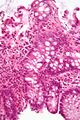 Cryptitis high magnification
 -
Cryptitis intermediate magnification
-
Colitis with granuloma high magnification
-
Colitis with granuloma intermediate magnification
-
Cryptitis very high magnification
-
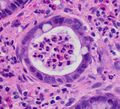 Histopathology of a crypt abscess


Medical Disclaimer: WikiMD is for informational purposes only and is not a substitute for professional medical advice. Content may be inaccurate or outdated and should not be used for diagnosis or treatment. Always consult your healthcare provider for medical decisions. Verify information with trusted sources such as CDC.gov and NIH.gov. By using this site, you agree that WikiMD is not liable for any outcomes related to its content. See full disclaimer.
Credits:Most images are courtesy of Wikimedia commons, and templates, categories Wikipedia, licensed under CC BY SA or similar.
Translate page: - East Asian
中文,
日本,
한국어,
South Asian
हिन्दी,
தமிழ்,
తెలుగు,
Urdu,
ಕನ್ನಡ,
Southeast Asian
Indonesian,
Vietnamese,
Thai,
မြန်မာဘာသာ,
বাংলা
European
español,
Deutsch,
français,
Greek,
português do Brasil,
polski,
română,
русский,
Nederlands,
norsk,
svenska,
suomi,
Italian
Middle Eastern & African
عربى,
Turkish,
Persian,
Hebrew,
Afrikaans,
isiZulu,
Kiswahili,
Other
Bulgarian,
Hungarian,
Czech,
Swedish,
മലയാളം,
मराठी,
ਪੰਜਾਬੀ,
ગુજરાતી,
Portuguese,
Ukrainian


