Creamed honey
Creamed honey, also known as whipped honey, spun honey, or churned honey, is a type of honey that has been processed to control crystallization. The process results in a smooth, spreadable consistency that is preferred by many consumers over liquid honey.
Production Process[edit]
The production of creamed honey involves controlling the crystallization process of honey. Natural honey crystallizes over time, but the size of the crystals can vary, leading to a gritty texture. Creamed honey is made by inducing the formation of small crystals, which results in a smooth texture.
The process typically involves the following steps:
- Seed Honey: A small amount of finely crystallized honey, known as "seed honey," is added to liquid honey. This seed honey acts as a template for the crystallization process.
- Mixing: The mixture is stirred to ensure even distribution of the seed crystals throughout the liquid honey.
- Cooling: The honey is then cooled to a temperature that promotes crystallization.
- Storage: The honey is stored at a controlled temperature until the desired consistency is achieved.
Characteristics[edit]
Creamed honey has several characteristics that distinguish it from other forms of honey:
- Texture: The texture is smooth and spreadable, similar to that of butter or margarine.
- Flavor: The flavor of creamed honey is the same as the original honey, as the process does not alter its taste.
- Stability: Creamed honey does not separate or crystallize further, making it stable over time.
Uses[edit]
Creamed honey is used in a variety of culinary applications. It is often spread on bread, toast, or crackers. It can also be used as a sweetener in tea, coffee, or baked goods.
Related Pages[edit]
-
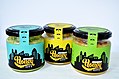 Creamed honey


Medical Disclaimer: WikiMD is for informational purposes only and is not a substitute for professional medical advice. Content may be inaccurate or outdated and should not be used for diagnosis or treatment. Always consult your healthcare provider for medical decisions. Verify information with trusted sources such as CDC.gov and NIH.gov. By using this site, you agree that WikiMD is not liable for any outcomes related to its content. See full disclaimer.
Credits:Most images are courtesy of Wikimedia commons, and templates, categories Wikipedia, licensed under CC BY SA or similar.
Translate page: - East Asian
中文,
日本,
한국어,
South Asian
हिन्दी,
தமிழ்,
తెలుగు,
Urdu,
ಕನ್ನಡ,
Southeast Asian
Indonesian,
Vietnamese,
Thai,
မြန်မာဘာသာ,
বাংলা
European
español,
Deutsch,
français,
Greek,
português do Brasil,
polski,
română,
русский,
Nederlands,
norsk,
svenska,
suomi,
Italian
Middle Eastern & African
عربى,
Turkish,
Persian,
Hebrew,
Afrikaans,
isiZulu,
Kiswahili,
Other
Bulgarian,
Hungarian,
Czech,
Swedish,
മലയാളം,
मराठी,
ਪੰਜਾਬੀ,
ગુજરાતી,
Portuguese,
Ukrainian

