Cracker (food)
A cracker is a type of baked good typically made from flour. Originating from the western culinary tradition, it is a common food item in various cuisines worldwide. Crackers are often branded as a nutritious and convenient way to consume a staple food or cereal grain.
History[edit]
The cracker was first invented in the United States in 1792 by John Pearson. He aimed to create a type of bread that would last longer than traditional sailor's biscuits during sea voyages. Pearson's invention quickly evolved into the cracker we know today.
Types of Crackers[edit]
There are many different types of crackers, including cream crackers, water biscuits, hardtacks, and oyster crackers. These vary in terms of their ingredients, preparation methods, and uses in different dishes.
Cream Crackers[edit]
Cream crackers are a popular type of cracker known for their distinctive texture and taste. They are made by combining flour with a fat source, such as butter or oil, and a leavening agent.
Water Biscuits[edit]
Water biscuits are a type of cracker that is typically served with cheese. They are made by combining flour with water, and sometimes salt, before being baked until crisp.
Hardtacks[edit]
Hardtacks are a type of cracker that was traditionally used by sailors, soldiers, and pioneers during long journeys. They are made by combining flour with water and salt, and then baking them until they are hard and dry.
Oyster Crackers[edit]
Oyster crackers are small, round crackers that are typically served with soups and chowders. They are made by combining flour with a fat source and a leavening agent, and then baking them until they are crisp.
Nutrition[edit]
Crackers are a source of carbohydrates, and depending on the ingredients used, they can also provide protein, fiber, and various vitamins and minerals. However, they can also be high in sodium and fat, particularly if they are made with refined flour and added fats.
See Also[edit]

-
Crackers with herring and garlic sauce
-
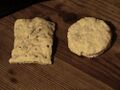 Army and Navy hard tack
 -
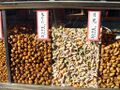 Arare
Arare -
NY Deli Bagel Chips
-
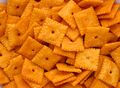 Cheez-It Crackers
 -
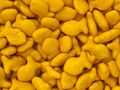 Goldfish Crackers
 -
Graham Cracker Stack
-
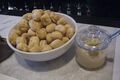 Oyster Crackers
 -
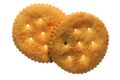 Ritz Crackers
 -
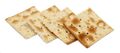 Saltine Crackers
 -
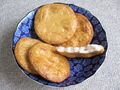 Japanese Senbeis
 -
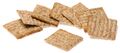 Triscuit Crackers


Medical Disclaimer: WikiMD is for informational purposes only and is not a substitute for professional medical advice. Content may be inaccurate or outdated and should not be used for diagnosis or treatment. Always consult your healthcare provider for medical decisions. Verify information with trusted sources such as CDC.gov and NIH.gov. By using this site, you agree that WikiMD is not liable for any outcomes related to its content. See full disclaimer.
Credits:Most images are courtesy of Wikimedia commons, and templates, categories Wikipedia, licensed under CC BY SA or similar.
Translate page: - East Asian
中文,
日本,
한국어,
South Asian
हिन्दी,
தமிழ்,
తెలుగు,
Urdu,
ಕನ್ನಡ,
Southeast Asian
Indonesian,
Vietnamese,
Thai,
မြန်မာဘာသာ,
বাংলা
European
español,
Deutsch,
français,
Greek,
português do Brasil,
polski,
română,
русский,
Nederlands,
norsk,
svenska,
suomi,
Italian
Middle Eastern & African
عربى,
Turkish,
Persian,
Hebrew,
Afrikaans,
isiZulu,
Kiswahili,
Other
Bulgarian,
Hungarian,
Czech,
Swedish,
മലയാളം,
मराठी,
ਪੰਜਾਬੀ,
ગુજરાતી,
Portuguese,
Ukrainian


