Contact tracing
Contact tracing is a process used in epidemiology to identify and monitor individuals who have had contact with an infectious disease patient. The goal of contact tracing is to interrupt the chain of transmission and reduce the spread of the disease.
History[edit]
The practice of contact tracing has been used for decades to control the spread of diseases such as tuberculosis, HIV/AIDS, and sexually transmitted infections. The method gained significant attention during the 2014 Ebola outbreak in West Africa and the COVID-19 pandemic.
Process[edit]
Contact tracing involves three primary steps: contact identification, contact listing, and contact follow-up.
Contact Identification[edit]
Once a person is confirmed as infected with a disease, healthcare professionals interview the patient to identify everyone they have been in close contact with during the time they may have been infectious.
Contact Listing[edit]
The contacts identified are then listed and informed about their contact status, what it means, the actions that will follow, and the importance of receiving early care if they develop symptoms. Contacts are also provided with information about prevention of the disease.
Contact Follow-Up[edit]
Regular follow-ups are conducted with all contacts to monitor for symptoms and test for signs of infection.
Challenges[edit]
Contact tracing is a labor-intensive process that requires a large workforce, especially during a widespread outbreak. Other challenges include ensuring the privacy and confidentiality of patients and contacts, and the stigma associated with certain diseases.
Digital Contact Tracing[edit]
With the advent of digital technology, digital contact tracing has emerged as a tool to supplement traditional contact tracing. This involves the use of mobile applications to track individuals' proximity to others and notify them if they have been in close contact with a confirmed case.
See Also[edit]
-
 Contact tracing adapted
 -
 What is contact tracing COVID-19
 -
 Covid-19 Contact tracing 05
 -
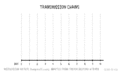 Covid-19 Contact tracing Infectious timeline 02
 -
 Contact Tracing During a Cholera Outbreak - Bangladesh
 -
 Schematic of prospective contact tracing versus prospective and retrospective contact tracing
 -
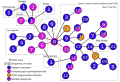 AIDS index case graph
 -
 COVID-19 7-2021 hinnerk ruemenapf
 -
 A schematic of app-based COVID-19 contact tracing
 -
 Sonia Y Angell - COVID contact tracing video


.jpg)


.jpg)

Medical Disclaimer: WikiMD is for informational purposes only and is not a substitute for professional medical advice. Content may be inaccurate or outdated and should not be used for diagnosis or treatment. Always consult your healthcare provider for medical decisions. Verify information with trusted sources such as CDC.gov and NIH.gov. By using this site, you agree that WikiMD is not liable for any outcomes related to its content. See full disclaimer.
Credits:Most images are courtesy of Wikimedia commons, and templates, categories Wikipedia, licensed under CC BY SA or similar.
Translate page: - East Asian
中文,
日本,
한국어,
South Asian
हिन्दी,
தமிழ்,
తెలుగు,
Urdu,
ಕನ್ನಡ,
Southeast Asian
Indonesian,
Vietnamese,
Thai,
မြန်မာဘာသာ,
বাংলা
European
español,
Deutsch,
français,
Greek,
português do Brasil,
polski,
română,
русский,
Nederlands,
norsk,
svenska,
suomi,
Italian
Middle Eastern & African
عربى,
Turkish,
Persian,
Hebrew,
Afrikaans,
isiZulu,
Kiswahili,
Other
Bulgarian,
Hungarian,
Czech,
Swedish,
മലയാളം,
मराठी,
ਪੰਜਾਬੀ,
ગુજરાતી,
Portuguese,
Ukrainian

