Congenital amputation
Congenital amputation is a condition where a person is born without a limb or limbs, or without a part of a limb or limbs. It is a birth defect that can be caused by a number of factors.
Causes[edit]
The exact cause of congenital amputation is not known. However, it is believed to be caused by a disruption in the blood supply to the developing limb during pregnancy. This can occur due to a number of reasons, including:
- Genetic factors
- Environmental factors
- Maternal health conditions
- Medications taken during pregnancy
- Infections during pregnancy
Symptoms[edit]
The main symptom of congenital amputation is the absence of a limb or part of a limb at birth. The extent of the amputation can vary greatly, from the absence of a single digit to the absence of an entire limb.
Diagnosis[edit]
Congenital amputation can be diagnosed during pregnancy through an ultrasound scan. After birth, the diagnosis is made based on a physical examination of the newborn.
Treatment[edit]
The treatment for congenital amputation depends on the extent of the amputation and the overall health of the child. Treatment options can include:
Prognosis[edit]
With appropriate treatment and support, most children with congenital amputation can lead healthy, active lives.
See also[edit]

This WikiMD article can only be edited by registered and verified editors. You can log in or register.
-
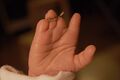 Amniotic band hand


Medical Disclaimer: WikiMD is for informational purposes only and is not a substitute for professional medical advice. Content may be inaccurate or outdated and should not be used for diagnosis or treatment. Always consult your healthcare provider for medical decisions. Verify information with trusted sources such as CDC.gov and NIH.gov. By using this site, you agree that WikiMD is not liable for any outcomes related to its content. See full disclaimer.
Credits:Most images are courtesy of Wikimedia commons, and templates, categories Wikipedia, licensed under CC BY SA or similar.
Translate page: - East Asian
中文,
日本,
한국어,
South Asian
हिन्दी,
தமிழ்,
తెలుగు,
Urdu,
ಕನ್ನಡ,
Southeast Asian
Indonesian,
Vietnamese,
Thai,
မြန်မာဘာသာ,
বাংলা
European
español,
Deutsch,
français,
Greek,
português do Brasil,
polski,
română,
русский,
Nederlands,
norsk,
svenska,
suomi,
Italian
Middle Eastern & African
عربى,
Turkish,
Persian,
Hebrew,
Afrikaans,
isiZulu,
Kiswahili,
Other
Bulgarian,
Hungarian,
Czech,
Swedish,
മലയാളം,
मराठी,
ਪੰਜਾਬੀ,
ગુજરાતી,
Portuguese,
Ukrainian

