Computer
Computer is a machine that can be instructed to carry out sequences of arithmetic or logical operations automatically via computer programming. Modern computers have the ability to follow generalized sets of operations, called programs. These programs enable computers to perform an extremely wide range of tasks.
History[edit]
The first digital electronic calculating machines were developed during World War II. The speed, power and versatility of computers have been increasing dramatically ever since then. Conventionally, a modern computer consists of at least one processing element, typically a central processing unit (CPU) and some form of memory.
Types of Computers[edit]
Computers are categorized based on their physical size, purpose and working principle. The four basic types of computers are Supercomputer, Mainframe Computer, Minicomputer and Microcomputer.
Components[edit]
A computer's hardware components include the Central Processing Unit, Motherboard, Random Access Memory, Hard Drive, Power Supply, Video Card, and Computer Case.
Software[edit]
Software refers to parts of the computer which do not have a material form, such as programs, data, protocols, etc. Software is that part of a computer system that consists of encoded information or computer instructions.
Applications[edit]
Computers are used as control systems for a wide variety of industrial and consumer devices. This includes simple special purpose devices like microwave ovens and remote controls, factory devices such as industrial robots and computer-aided design, and also general purpose devices like personal computers and mobile devices such as smartphones.
Healthcare Applications[edit]
In healthcare, computers find applications in areas such as Medical Imaging, Electronic Health Records, Telemedicine, Surgical Procedures, and Pharmacy Management.
See Also[edit]
- Computer Science
- Information Technology
- Artificial Intelligence
- Computer Programming
- Computer Network
- Computer Security
 | This medical article is a stub. You can help WikiMD by expanding the page. |
-
 ENIAC changing a tube
 -
 IBM System/360 Mainframe
 -
 LYF WATER 2 Smartphone
 -
 ThinkCentre S50
 -
 Gamecube console
 -
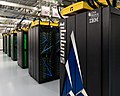 Summit supercomputer
 -
 X-4 with Female Computer
 -
 Os d'Ishango
 -
 Abacus
 -
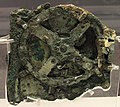 Antikythera mechanism
 -
 Slide rule
 -
 Charles Babbage
.jpg)


.jpg)


Medical Disclaimer: WikiMD is for informational purposes only and is not a substitute for professional medical advice. Content may be inaccurate or outdated and should not be used for diagnosis or treatment. Always consult your healthcare provider for medical decisions. Verify information with trusted sources such as CDC.gov and NIH.gov. By using this site, you agree that WikiMD is not liable for any outcomes related to its content. See full disclaimer.
Credits:Most images are courtesy of Wikimedia commons, and templates, categories Wikipedia, licensed under CC BY SA or similar.
Translate this page: - East Asian
中文,
日本,
한국어,
South Asian
हिन्दी,
தமிழ்,
తెలుగు,
Urdu,
ಕನ್ನಡ,
Southeast Asian
Indonesian,
Vietnamese,
Thai,
မြန်မာဘာသာ,
বাংলা
European
español,
Deutsch,
français,
Greek,
português do Brasil,
polski,
română,
русский,
Nederlands,
norsk,
svenska,
suomi,
Italian
Middle Eastern & African
عربى,
Turkish,
Persian,
Hebrew,
Afrikaans,
isiZulu,
Kiswahili,
Other
Bulgarian,
Hungarian,
Czech,
Swedish,
മലയാളം,
मराठी,
ਪੰਜਾਬੀ,
ગુજરાતી,
Portuguese,
Ukrainian
