Common Fisheries Policy

Common Fisheries Policy (CFP) is the European Union's (EU) framework for managing fishing and aquaculture within its member states and the surrounding international waters. Established to ensure that fishing and aquaculture are environmentally, economically, and socially sustainable, the CFP aims to protect marine resources and support the fishing industry and coastal communities across the EU.
History[edit]
The origins of the Common Fisheries Policy date back to the early 1970s, shortly after the original six member states of the EU (then the European Economic Community) were joined by Denmark, Ireland, and the United Kingdom, countries with significant fishing interests. The need for a common policy was driven by the shared resources of the seas and the challenges of managing fish stocks that do not adhere to national boundaries.
Objectives[edit]
The main objectives of the CFP are to ensure that fishing and aquaculture activities are environmentally sustainable in the long term, provide a fair standard of living for those who depend on fishing activities, contribute to the availability of food supplies, and promote the implementation of the European Maritime and Fisheries Fund (EMFF). The policy covers all aspects of fishing: conservation of fish stocks, environmental legislation, the technical measures of fishing, market and trade policies for fishery and aquaculture products, and support for the development and implementation of the EMFF.
Components[edit]
The CFP consists of several key components:
- Conservation of marine biological resources: This includes setting Total Allowable Catches (TACs) and quotas, which limit the amount of each species that can be caught, and implementing technical measures to protect young, juvenile fish and sensitive habitats.
- Structural policy: Aimed at adjusting the capacity of the EU fishing fleet to available fishing opportunities, this component includes measures such as fleet reduction programs and restrictions on the types of gear that can be used.
- Market and trade policy: This involves the regulation of the market for fishery and aquaculture products to ensure stable supply and prices, including the establishment of the Common Market Organisation (CMO) for fishery products.
- International policy: The CFP also governs the EU's external fishing relations, including access agreements with non-EU countries and participation in regional and international fisheries organizations.
- Funding: The European Maritime and Fisheries Fund (EMFF) supports the development and implementation of the CFP, providing funding for projects that promote sustainable fishing, the conservation of marine resources, and the development of coastal communities.
Reform[edit]
The CFP has undergone several reforms since its inception, with the most recent major reform taking place in 2014. This reform introduced a number of significant changes, including the introduction of a discards ban (landing obligation), which requires all catches of regulated species to be landed and counted against quotas, and the implementation of multi-annual plans for the sustainable management of fish stocks. The reform also emphasized the importance of decentralized decision-making, allowing for more regionalized approaches to fisheries management.
Challenges and Criticisms[edit]
Despite its objectives, the CFP has faced criticism for failing to prevent overfishing, damaging marine ecosystems, and negatively impacting coastal communities. Critics argue that the policy has often been influenced more by political considerations than by scientific advice, leading to quotas that are set too high to be sustainable. The complexity of the CFP and its slow adaptation to changing circumstances have also been highlighted as weaknesses.
Future Directions[edit]
The future of the CFP is likely to focus on further improving sustainability, with an emphasis on ecosystem-based management, enhancing the resilience of marine ecosystems, and adapting to the impacts of climate change on marine resources. The policy will also need to address the socio-economic challenges facing the fishing industry, ensuring that it can continue to provide jobs and support coastal communities while maintaining healthy fish stocks for future generations.
| This article is a stub. You can help WikiMD by registering to expand it. |
Common Fisheries Policy[edit]
-
 European Union Exclusive Economic Zones
 -
 Fishery expenditure 2004
 -
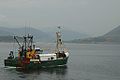 Fishing Trawler


Ad. Transform your health with W8MD Weight Loss, Sleep & MedSpa

Tired of being overweight?
Special offer:
Budget GLP-1 weight loss medications
- Semaglutide starting from $29.99/week and up with insurance for visit of $59.99 and up per week self pay.
- Tirzepatide starting from $45.00/week and up (dose dependent) or $69.99/week and up self pay
✔ Same-week appointments, evenings & weekends
Learn more:
Start your transformation today with W8MD weight loss centers.
|
WikiMD Medical Encyclopedia |
Medical Disclaimer: WikiMD is for informational purposes only and is not a substitute for professional medical advice. Content may be inaccurate or outdated and should not be used for diagnosis or treatment. Always consult your healthcare provider for medical decisions. Verify information with trusted sources such as CDC.gov and NIH.gov. By using this site, you agree that WikiMD is not liable for any outcomes related to its content. See full disclaimer.
Credits:Most images are courtesy of Wikimedia commons, and templates, categories Wikipedia, licensed under CC BY SA or similar.
Translate this page: - East Asian
中文,
日本,
한국어,
South Asian
हिन्दी,
தமிழ்,
తెలుగు,
Urdu,
ಕನ್ನಡ,
Southeast Asian
Indonesian,
Vietnamese,
Thai,
မြန်မာဘာသာ,
বাংলা
European
español,
Deutsch,
français,
Greek,
português do Brasil,
polski,
română,
русский,
Nederlands,
norsk,
svenska,
suomi,
Italian
Middle Eastern & African
عربى,
Turkish,
Persian,
Hebrew,
Afrikaans,
isiZulu,
Kiswahili,
Other
Bulgarian,
Hungarian,
Czech,
Swedish,
മലയാളം,
मराठी,
ਪੰਜਾਬੀ,
ગુજરાતી,
Portuguese,
Ukrainian
