Coffea arabica
Coffea arabica is a species of coffee native to the highlands of Ethiopia. It is also known as the "Arabian coffee", "coffee shrub of Arabia", "mountain coffee", or "arabica coffee". Coffea arabica is believed to be the first species of coffee to be cultivated, and is grown in many parts of the world, including Latin America, Central America, Africa, the Arabian Peninsula, and Asia. It accounts for 60% of the world's coffee production.
History[edit]
Coffea arabica is believed to have originated in the southwestern highlands of Ethiopia and was first cultivated on the Arabian Peninsula. The earliest credible evidence of coffee-drinking or knowledge of the coffee tree appears in the middle of the 15th century in the Sufi monasteries of Yemen.
Cultivation and Production[edit]
Coffea arabica prefers slightly acidic soils with good drainage. The plants are usually grown between 1,300 and 1,500 meters above sea level; temperatures below freezing or above 24 degrees Celsius can harm the plant. Each tree can produce from 0.5 to 5.0 kg of dried beans, depending on the tree's individual character and the climate that season.
Varieties[edit]
There are several varieties of Coffea arabica, each with its own unique characteristics. These include 'Typica', 'Bourbon', 'Blue Mountain', 'Mundo Novo', 'Tico', 'San Ramon', and 'Caturra'.
Health Effects[edit]
Coffea arabica contains less caffeine than any other commercially cultivated species of coffee. The caffeine in coffee can have both positive and negative health effects. It can treat and prevent the onset of various diseases like cancer, diabetes, Parkinson's disease, and heart disease.
Economic Importance[edit]
Coffea arabica is of great economic importance as coffee is one of the top three most consumed beverages in the world. After crude oil, coffee is the most sought commodity in the world.
 | This coffee-related article is a stub. You can help WikiMD by expanding the page. |
-
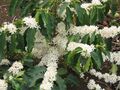 Coffea arabica
 -
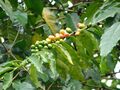 Coffea arabica
 -
Coffea arabica
-
Coffea arabica
-
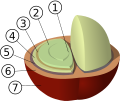 Coffea arabica
 -
Coffea arabica
-
Coffea arabica
-
Coffea arabica
-
Coffea arabica
-
Coffea arabica
-
Coffea arabica
-
Coffea arabica


Medical Disclaimer: WikiMD is for informational purposes only and is not a substitute for professional medical advice. Content may be inaccurate or outdated and should not be used for diagnosis or treatment. Always consult your healthcare provider for medical decisions. Verify information with trusted sources such as CDC.gov and NIH.gov. By using this site, you agree that WikiMD is not liable for any outcomes related to its content. See full disclaimer.
Credits:Most images are courtesy of Wikimedia commons, and templates, categories Wikipedia, licensed under CC BY SA or similar.
Translate page: - East Asian
中文,
日本,
한국어,
South Asian
हिन्दी,
தமிழ்,
తెలుగు,
Urdu,
ಕನ್ನಡ,
Southeast Asian
Indonesian,
Vietnamese,
Thai,
မြန်မာဘာသာ,
বাংলা
European
español,
Deutsch,
français,
Greek,
português do Brasil,
polski,
română,
русский,
Nederlands,
norsk,
svenska,
suomi,
Italian
Middle Eastern & African
عربى,
Turkish,
Persian,
Hebrew,
Afrikaans,
isiZulu,
Kiswahili,
Other
Bulgarian,
Hungarian,
Czech,
Swedish,
മലയാളം,
मराठी,
ਪੰਜਾਬੀ,
ગુજરાતી,
Portuguese,
Ukrainian


