Cinsaut
Cinsaut or Cinsault is a red wine grape variety, traditionally used as a blending component in several wines. It is known for its soft, silky texture and spicy, aromatic flavor profile.
History[edit]
The origins of Cinsaut are believed to be in the Hérault region of southern France, but it is now grown in many wine-producing regions around the world. It is one of the oldest grape varieties in France and has been used in the production of wine for centuries.
Characteristics[edit]
Cinsaut is a dark-skinned grape variety that produces wines with a light to medium body, low tannins, and high acidity. The wines typically have a bright red color and a spicy, floral aroma. The flavor profile of Cinsaut wines can include notes of red fruit, such as strawberries and raspberries, as well as hints of spice and herbs.
Viticulture[edit]
Cinsaut is a hardy grape variety that can withstand dry and hot conditions. It is also resistant to many common vine diseases, making it a popular choice for growers in regions with challenging climates. However, it is a high-yielding variety, which can lead to lower quality wines if yields are not controlled.
Wine Production[edit]
In wine production, Cinsaut is often blended with other grape varieties, such as Grenache, Syrah, and Carignan, to add complexity and balance. It is also used to produce rosé wines, particularly in the Provence region of France.
Regions[edit]
While Cinsaut is most commonly associated with the Languedoc-Roussillon and Rhône Valley regions of France, it is also grown in Italy, Spain, South Africa, and Australia, among others. In South Africa, it was used to create the country's unique Pinotage grape, a cross between Cinsaut and Pinot Noir.
Food Pairing[edit]
Cinsaut wines are versatile when it comes to food pairing. They can be enjoyed with a variety of dishes, including grilled meats, poultry, fish, and vegetable dishes. The wines' high acidity and low tannins make them a good match for spicy and flavorful foods.


-
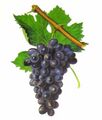 Cinsaut
 -
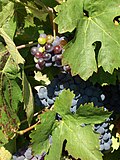 Cinsaut grapes in Luberon
 -
 Cinsaut leaves


Medical Disclaimer: WikiMD is for informational purposes only and is not a substitute for professional medical advice. Content may be inaccurate or outdated and should not be used for diagnosis or treatment. Always consult your healthcare provider for medical decisions. Verify information with trusted sources such as CDC.gov and NIH.gov. By using this site, you agree that WikiMD is not liable for any outcomes related to its content. See full disclaimer.
Credits:Most images are courtesy of Wikimedia commons, and templates, categories Wikipedia, licensed under CC BY SA or similar.
Translate page: - East Asian
中文,
日本,
한국어,
South Asian
हिन्दी,
தமிழ்,
తెలుగు,
Urdu,
ಕನ್ನಡ,
Southeast Asian
Indonesian,
Vietnamese,
Thai,
မြန်မာဘာသာ,
বাংলা
European
español,
Deutsch,
français,
Greek,
português do Brasil,
polski,
română,
русский,
Nederlands,
norsk,
svenska,
suomi,
Italian
Middle Eastern & African
عربى,
Turkish,
Persian,
Hebrew,
Afrikaans,
isiZulu,
Kiswahili,
Other
Bulgarian,
Hungarian,
Czech,
Swedish,
മലയാളം,
मराठी,
ਪੰਜਾਬੀ,
ગુજરાતી,
Portuguese,
Ukrainian

