Churrasco
Churrasco is a term used in Latin America, particularly in Brazil, Argentina, and Uruguay, to refer to grilled meat or barbecue. The term has different meanings and cooking styles in different regions.
Etymology[edit]
The word "Churrasco" is derived from the Spanish term "churrascar", which means "to burn". It is believed to have originated from the cooking techniques used by the Gauchos, the cowboys of South America, who cooked their meat over open fires.
Cooking Method[edit]
In the traditional method of cooking Churrasco, large pieces of meat are skewered and cooked over an open fire or on a churrasqueira, a type of grill commonly used in Brazil and Argentina. The meat is typically seasoned with a simple marinade of salt, garlic, and lime juice, allowing the natural flavors of the meat to shine through.
Types of Meat[edit]
Various types of meat can be used in Churrasco, including beef, pork, chicken, and lamb. In Brazil, the most commonly used cut of beef is Picanha, a prime cut of the top sirloin. Other popular cuts include Alcatra (rump cover) and Fraldinha (flank steak).
Serving[edit]
Churrasco is often served with a side of chimichurri, a sauce made from parsley, garlic, vinegar, oil, and chili flakes. In Brazil, it is also common to serve Churrasco with farofa, a toasted cassava flour mixture, and vinaigrette salsa.
Cultural Significance[edit]
Churrasco is more than just a cooking style; it is a social event. In Brazil and Argentina, a Churrasco is an occasion for family and friends to gather and enjoy food together. It is often associated with celebrations and special occasions.
See Also[edit]

-
Churrasco
-
Costela no Fogo
-
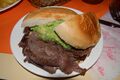 Churrasco
 -
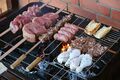 Churrasco Carioca
 -
Churrasco
-
Wagyu
-
Prime Rib


Medical Disclaimer: WikiMD is for informational purposes only and is not a substitute for professional medical advice. Content may be inaccurate or outdated and should not be used for diagnosis or treatment. Always consult your healthcare provider for medical decisions. Verify information with trusted sources such as CDC.gov and NIH.gov. By using this site, you agree that WikiMD is not liable for any outcomes related to its content. See full disclaimer.
Credits:Most images are courtesy of Wikimedia commons, and templates, categories Wikipedia, licensed under CC BY SA or similar.
Translate page: - East Asian
中文,
日本,
한국어,
South Asian
हिन्दी,
தமிழ்,
తెలుగు,
Urdu,
ಕನ್ನಡ,
Southeast Asian
Indonesian,
Vietnamese,
Thai,
မြန်မာဘာသာ,
বাংলা
European
español,
Deutsch,
français,
Greek,
português do Brasil,
polski,
română,
русский,
Nederlands,
norsk,
svenska,
suomi,
Italian
Middle Eastern & African
عربى,
Turkish,
Persian,
Hebrew,
Afrikaans,
isiZulu,
Kiswahili,
Other
Bulgarian,
Hungarian,
Czech,
Swedish,
മലയാളം,
मराठी,
ਪੰਜਾਬੀ,
ગુજરાતી,
Portuguese,
Ukrainian


