Chronic cerebrospinal venous insufficiency controversy

Editor-In-Chief: Prab R Tumpati, MD
Obesity, Sleep & Internal medicine
Founder, WikiMD Wellnesspedia &
W8MD's weight loss doctor NYC
Philadelphia GLP-1 weight loss and GLP-1 clinic NYC
| Chronic cerebrospinal venous insufficiency controversy | |
|---|---|

| |
| Synonyms | N/A |
| Pronounce | N/A |
| Specialty | N/A |
| Symptoms | Fatigue, headache, vision problems, balance issues |
| Complications | Multiple sclerosis |
| Onset | Typically adulthood |
| Duration | Chronic |
| Types | N/A |
| Causes | Venous insufficiency |
| Risks | Genetic predisposition, environmental factors |
| Diagnosis | Doppler ultrasound, MRI |
| Differential diagnosis | Multiple sclerosis, cerebral venous sinus thrombosis |
| Prevention | N/A |
| Treatment | Endovascular surgery, angioplasty |
| Medication | N/A |
| Prognosis | Controversial, varies by individual |
| Frequency | Unknown, debated |
| Deaths | Not directly attributed |
Chronic Cerebrospinal Venous Insufficiency (CCSVI) is a hypothesized vascular condition characterized by impaired blood flow in the veins draining the central nervous system. The controversy surrounding CCSVI primarily revolves around its proposed association with Multiple Sclerosis (MS), a chronic demyelinating disease of the central nervous system, and the efficacy of venous angioplasty as a treatment.
Origins[edit]
The CCSVI hypothesis was first proposed by Dr. Paolo Zamboni in 2009. Zamboni, an Italian vascular surgeon, suggested that narrowed or blocked veins in the neck and chest might impede normal blood drainage from the brain and spinal cord, leading to a buildup of iron and subsequent neurological damage characteristic of MS. Zamboni's initial studies reported a high prevalence of CCSVI in patients with MS compared to healthy controls, proposing venous angioplasty, commonly known as the "Liberation procedure," as a potential treatment.
Scientific Scrutiny and Research[edit]
Following Zamboni's publications, the CCSVI hypothesis gained significant attention from both the scientific community and the public, especially among those affected by MS. Numerous studies were launched to replicate Zamboni's findings and assess the efficacy of the Liberation procedure. However, subsequent research yielded mixed results. While some studies found a correlation between CCSVI and MS, others failed to replicate these findings, raising doubts about the validity of the CCSVI hypothesis and the safety and efficacy of venous angioplasty for MS patients.
Controversy and Debate[edit]
The CCSVI controversy is multifaceted, involving scientific, ethical, and social dimensions. Critics of the CCSVI hypothesis argue that the initial studies had methodological flaws, such as small sample sizes and lack of blinding. Concerns were also raised about the potential risks associated with the Liberation procedure, including venous thrombosis, stent migration, and even death. Proponents of CCSVI, including some patients and advocacy groups, argue that the procedure has provided symptomatic relief for some individuals with MS, despite the lack of conclusive scientific evidence supporting its efficacy. This has led to a heated debate within the MS community, with some patients seeking the procedure abroad in countries where it is offered.
Current Status[edit]
As of the last review, major health organizations, including the National Multiple Sclerosis Society and the MS Society of Canada, have urged caution, emphasizing the need for further high-quality research to conclusively determine the relationship between CCSVI and MS, if any, and the safety and efficacy of venous angioplasty for MS patients. Clinical trials, including those funded by these organizations, have so far failed to provide strong evidence supporting the CCSVI hypothesis.
Gallery[edit]
-
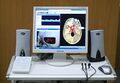 Doppler ultrasound analyzer used for measuring blood velocity
 -
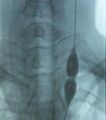 Balloon dilatation procedure for stenosed jugular vein in CCSVI
 -
 Paolo Zamboni, the researcher associated with CCSVI


Summary[edit]
The CCSVI controversy highlights the challenges of translating preliminary scientific hypotheses into clinical practice, especially in the context of diseases with significant unmet medical needs like MS. It underscores the importance of rigorous scientific validation before adopting new treatments and the need for open dialogue among researchers, clinicians, patients, and the public.
 | This medical article is a stub. You can help WikiMD by expanding the page. |

Medical Disclaimer: WikiMD is for informational purposes only and is not a substitute for professional medical advice. Content may be inaccurate or outdated and should not be used for diagnosis or treatment. Always consult your healthcare provider for medical decisions. Verify information with trusted sources such as CDC.gov and NIH.gov. By using this site, you agree that WikiMD is not liable for any outcomes related to its content. See full disclaimer.
Credits:Most images are courtesy of Wikimedia commons, and templates, categories Wikipedia, licensed under CC BY SA or similar.
Translate page: - East Asian
中文,
日本,
한국어,
South Asian
हिन्दी,
தமிழ்,
తెలుగు,
Urdu,
ಕನ್ನಡ,
Southeast Asian
Indonesian,
Vietnamese,
Thai,
မြန်မာဘာသာ,
বাংলা
European
español,
Deutsch,
français,
Greek,
português do Brasil,
polski,
română,
русский,
Nederlands,
norsk,
svenska,
suomi,
Italian
Middle Eastern & African
عربى,
Turkish,
Persian,
Hebrew,
Afrikaans,
isiZulu,
Kiswahili,
Other
Bulgarian,
Hungarian,
Czech,
Swedish,
മലയാളം,
मराठी,
ਪੰਜਾਬੀ,
ગુજરાતી,
Portuguese,
Ukrainian

