Plant defense against herbivory
Plant defense against herbivory encompasses a range of strategies plants use to deter herbivores from consuming them. These strategies can be broadly classified into two categories: physical or mechanical defenses, and chemical defenses. Additionally, some plants have evolved to form symbiotic relationships with other organisms as a means of defense.
Physical or Mechanical Defenses[edit]
Physical or mechanical defenses are structural features that make plants less palatable or more difficult for herbivores to consume. These include:
- Thorns and Spines: Sharp structures that can cause physical harm to herbivores attempting to eat the plant. Examples include the thorns of roses (Rosa spp.) and the spines of cacti (Cactaceae).
- Trichomes: Hair-like structures that can be either glandular, secreting substances that are sticky or toxic to herbivores, or non-glandular, serving as a physical barrier. Found in plants like tomato (Solanum lycopersicum) and tobacco (Nicotiana tabacum).
- Tough Leaves: Some plants have thick, leathery leaves or high silica content, making them difficult to chew or digest. Grasses (Poaceae) often employ this strategy.
Chemical Defenses[edit]
Chemical defenses involve the production of compounds that are toxic, repellent, or reduce the digestibility of the plant to herbivores. These include:
- Alkaloids: Nitrogen-containing compounds that can have a wide range of effects on herbivores, from deterring feeding to being lethal. Examples include nicotine in tobacco and morphine in opium poppy (Papaver somniferum).
- Terpenoids: The largest class of secondary metabolites, some of which are toxic to herbivores. For instance, pyrethrins found in chrysanthemums (Chrysanthemum cinerariifolium) are used as natural insecticides.
- Phenolics: Compounds such as tannins that can reduce protein digestibility in herbivores. Oak trees (Quercus spp.) are well-known for their high tannin content.
Induced Defenses[edit]
Plants can also have induced defenses, which are activated in response to herbivore attack. These can be either direct defenses, such as the production of more toxins, or indirect defenses, such as the release of volatile organic compounds that attract the predators of the herbivores.
Symbiotic Relationships[edit]
Some plants have evolved symbiotic relationships as a means of defense. For example, the acacia tree (Acacia) forms mutualistic relationships with ant species; the tree provides nectar to the ants, and in return, the ants defend the tree against herbivores.
Conclusion[edit]
Plant defense against herbivory is a complex and multifaceted area of study in botany and ecology. Understanding these defense mechanisms not only sheds light on the evolutionary arms race between plants and herbivores but also has practical applications in agriculture and pest management.

 | This ecology-related article is a stub. You can help WikiMD by expanding the page. |
-
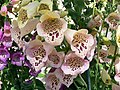 Plant defense against herbivory
 -
 Plant defense against herbivory
 -
 Plant defense against herbivory
 -
 Plant defense against herbivory
 -
 Plant defense against herbivory
 -
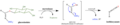 Plant defense against herbivory
 -
 Plant defense against herbivory
 -
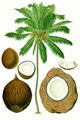 Plant defense against herbivory
 -
 Plant defense against herbivory
 -
 Plant defense against herbivory
 -
 Plant defense against herbivory


Sponsored Health Resource

W8MD Weight Loss, Sleep & MedSpa
Looking for physician-supervised weight loss, semaglutide, tirzepatide, or GLP-1 receptor agonist options? W8MD helps eligible patients in New York City, Brooklyn, New Jersey, Connecticut, Pennsylvania, Delaware, and greater Philadelphia with medical weight loss, sleep medicine, and long-term maintenance support.
GLP-1 specials: Affordable GLP-1 injections NYC and Philadelphia starting from $29.99/week and up for semaglutide with insurance accepted for qualifying visits, and $45/week and up for tirzepatide with insurance accepted for qualifying visits. Self-pay options start from $59.99/week and up for semaglutide and $69.99/week and up for tirzepatide.
Medical weight loss NYC | Affordable GLP-1 injections NYC | Budget GLP-1 weight loss shots Philadelphia | New Jersey medical weight loss | NYC medical weight loss | Philadelphia medical weight loss | Sleep clinic NYC | W8MD's Philadelphia GLP-1 doctor | Weight loss prescriptions NYC
Book a W8MD appointment · View GLP-1 specials
Paid promotional message. Eligibility, pricing, insurance coverage, medication availability, and results vary. Medical evaluation required.

Medical Disclaimer: WikiMD is for informational purposes only and is not a substitute for professional medical advice. Content may be inaccurate or outdated and should not be used for diagnosis or treatment. Always consult your healthcare provider for medical decisions. Verify information with trusted sources such as CDC.gov and NIH.gov. By using this site, you agree that WikiMD is not liable for any outcomes related to its content. See full disclaimer.
Credits:Most images are courtesy of Wikimedia commons, and templates, categories Wikipedia, licensed under CC BY SA or similar.
Translate page: - East Asian
中文,
日本,
한국어,
South Asian
हिन्दी,
தமிழ்,
తెలుగు,
Urdu,
ಕನ್ನಡ,
Southeast Asian
Indonesian,
Vietnamese,
Thai,
မြန်မာဘာသာ,
বাংলা
European
español,
Deutsch,
français,
Greek,
português do Brasil,
polski,
română,
русский,
Nederlands,
norsk,
svenska,
suomi,
Italian
Middle Eastern & African
عربى,
Turkish,
Persian,
Hebrew,
Afrikaans,
isiZulu,
Kiswahili,
Other
Bulgarian,
Hungarian,
Czech,
Swedish,
മലയാളം,
मराठी,
ਪੰਜਾਬੀ,
ગુજરાતી,
Portuguese,
Ukrainian

