Cell surface receptor
Cell surface receptors (also known as membrane receptors, transmembrane receptors, or cellular receptors) are proteins that are located on the cell membrane and serve as a communication link between the cell and the external environment. They play a crucial role in the body's communication system and are involved in a wide range of biological processes, including cell signaling, immune responses, and the regulation of cell growth and differentiation.
Structure[edit]
Cell surface receptors are typically composed of three parts: an extracellular domain, a transmembrane domain, and an intracellular domain. The extracellular domain is the part of the receptor that interacts with external signals or ligands. The transmembrane domain anchors the receptor in the cell membrane, and the intracellular domain transmits the signal inside the cell.
Function[edit]
The primary function of cell surface receptors is to detect signals from the external environment and transmit them into the cell. This process, known as signal transduction, involves a series of biochemical reactions that lead to a cellular response. The type of response depends on the specific receptor and the signal it receives. For example, some receptors trigger a change in cell metabolism, while others initiate cell division or apoptosis (programmed cell death).
Types of Cell Surface Receptors[edit]
There are several types of cell surface receptors, including G protein-coupled receptors (GPCRs), receptor tyrosine kinases (RTKs), and ion channel-linked receptors. Each type has a unique structure and function, and they all play a critical role in cell signaling.
G Protein-Coupled Receptors[edit]
GPCRs are the largest and most diverse group of membrane receptors in eukaryotes. They respond to a wide range of signals, including hormones, neurotransmitters, and light. When a ligand binds to a GPCR, it activates a G protein, which then triggers a series of events inside the cell.
Receptor Tyrosine Kinases[edit]
RTKs are high-affinity cell surface receptors for many polypeptide growth factors, cytokines, and hormones. When a ligand binds to an RTK, it triggers the receptor's kinase activity, leading to the phosphorylation of tyrosine residues and the activation of various intracellular signaling pathways.
Ion Channel-Linked Receptors[edit]
Ion channel-linked receptors, also known as ligand-gated ion channels, open an ion channel upon binding of a ligand. This allows ions to flow across the cell membrane, changing the cell's electrical potential and triggering a cellular response.
Clinical Significance[edit]
Cell surface receptors are targets for many drugs, as they can be manipulated to alter cell signaling and treat various diseases. For example, GPCRs are the target of approximately 40% of all modern medicinal drugs. Additionally, mutations in receptor genes can lead to diseases such as cancer, diabetes, and heart disease.
This cell biology related article is a stub. You can help WikiMD by expanding it.
 | This medical article is a stub. You can help WikiMD by expanding the page. |
Cell_surface_receptor[edit]
-
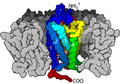 Sketch of a 7-transmembrane receptor in the membrane
 -
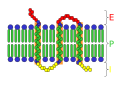 Diagram of a transmembrane receptor
 -
The external and internal reactions of a cell surface receptor
-
Three conformation states of acetylcholine receptor
-
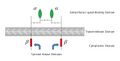 Structure of IGF-1 receptor
 -
Flow charts of two strategies of structure-based drug design


Advertise on WikiMD — 81,000+ full articles, ~900,000 total pages, ~250 million page views. Global reach, limited time promotional rates from $1/page/day. Learn more · View stats

Translate page: - East Asian
中文,
日本,
한국어,
South Asian
हिन्दी,
தமிழ்,
తెలుగు,
Urdu,
ಕನ್ನಡ,
Southeast Asian
Indonesian,
Vietnamese,
Thai,
မြန်မာဘာသာ,
বাংলা
European
español,
Deutsch,
français,
Greek,
português do Brasil,
polski,
română,
русский,
Nederlands,
norsk,
svenska,
suomi,
Italian
Middle Eastern & African
عربى,
Turkish,
Persian,
Hebrew,
Afrikaans,
isiZulu,
Kiswahili,
Other
Bulgarian,
Hungarian,
Czech,
Swedish,
മലയാളം,
मराठी,
ਪੰਜਾਬੀ,
ગુજરાતી,
Portuguese,
Ukrainian
About WikiMD • Contact • Disclaimer • Privacy • Copyright • Site statistics
Some content and images may originate from Wikimedia Commons or Wikipedia and remain subject to their stated licenses. Unless otherwise noted, eligible WikiMD content is available under CC BY-SA 4.0.
WikiMD Wellnesspedia — Free health & wellness information for patients, students, and health professionals.


