Carboxypeptidase A
Carboxypeptidase A is an enzyme that plays a crucial role in the process of protein digestion. It is classified as an exopeptidase, meaning it cleaves amino acids from the end of a peptide chain. Specifically, carboxypeptidase A removes the terminal amino acid with a free carboxyl group from a peptide, resulting in the release of an amino acid.
Function[edit]
Carboxypeptidase A is primarily found in the pancreas and is secreted into the small intestine, where it aids in the breakdown of proteins into smaller peptides and amino acids. It specifically targets peptides with a free carboxyl group at the C-terminus. By removing the terminal amino acid, carboxypeptidase A helps to further break down proteins into their constituent amino acids, which can then be absorbed by the body for various physiological processes.
Structure[edit]
Carboxypeptidase A is a zinc-dependent enzyme, meaning it requires the presence of zinc ions for its catalytic activity. It consists of a single polypeptide chain folded into a compact structure. The active site of the enzyme contains a zinc ion coordinated by several amino acid residues, which are essential for its enzymatic function.
Mechanism of Action[edit]
The mechanism of action of carboxypeptidase A involves the binding of the substrate peptide to the active site of the enzyme. The zinc ion facilitates the nucleophilic attack of a water molecule on the carbonyl carbon of the peptide bond, resulting in the formation of a tetrahedral intermediate. This intermediate is then stabilized by the zinc ion and other amino acid residues in the active site. Finally, a proton transfer occurs, leading to the release of the terminal amino acid and the formation of a new peptide bond.
Importance[edit]
Carboxypeptidase A plays a crucial role in the digestion and absorption of dietary proteins. Without the activity of this enzyme, the breakdown of proteins into absorbable amino acids would be incomplete, leading to impaired nutrient absorption and potential nutritional deficiencies. Additionally, carboxypeptidase A is also involved in other physiological processes, such as the regulation of peptide hormones and the degradation of certain toxic peptides.
Clinical Significance[edit]
Deficiencies or abnormalities in carboxypeptidase A can lead to various medical conditions. For example, a deficiency in this enzyme can result in a condition known as carboxypeptidase A deficiency syndrome, characterized by impaired protein digestion and malabsorption. Furthermore, carboxypeptidase A has been implicated in certain diseases, such as cancer, where its dysregulation can contribute to tumor growth and metastasis.
See Also[edit]
References[edit]
-
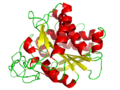 Carboxypeptidase A structure
 -
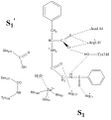 Active site of Carboxypeptidase A
 -
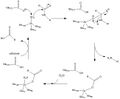 Carboxypeptidase A catalyzed proteolysis


Medical Disclaimer: WikiMD is for informational purposes only and is not a substitute for professional medical advice. Content may be inaccurate or outdated and should not be used for diagnosis or treatment. Always consult your healthcare provider for medical decisions. Verify information with trusted sources such as CDC.gov and NIH.gov. By using this site, you agree that WikiMD is not liable for any outcomes related to its content. See full disclaimer.
Credits:Most images are courtesy of Wikimedia commons, and templates, categories Wikipedia, licensed under CC BY SA or similar.
Translate page: - East Asian
中文,
日本,
한국어,
South Asian
हिन्दी,
தமிழ்,
తెలుగు,
Urdu,
ಕನ್ನಡ,
Southeast Asian
Indonesian,
Vietnamese,
Thai,
မြန်မာဘာသာ,
বাংলা
European
español,
Deutsch,
français,
Greek,
português do Brasil,
polski,
română,
русский,
Nederlands,
norsk,
svenska,
suomi,
Italian
Middle Eastern & African
عربى,
Turkish,
Persian,
Hebrew,
Afrikaans,
isiZulu,
Kiswahili,
Other
Bulgarian,
Hungarian,
Czech,
Swedish,
മലയാളം,
मराठी,
ਪੰਜਾਬੀ,
ગુજરાતી,
Portuguese,
Ukrainian

