Camera
Camera
This medical device related article is a stub.
A camera is an optical instrument used to capture images or videos. The term "camera" comes from the Latin "camera obscura," meaning "dark chamber," an early mechanism for projecting images.
History[edit]
The development of the camera can be traced back to the ancient Greeks and Chinese, who used the camera obscura principle. The first permanent photograph was created in 1826 by Joseph Nicéphore Niépce.
Types of Cameras[edit]
Cameras can be classified into several types based on their functionality and design:
- Digital camera: Uses electronic sensors to capture images, which are stored digitally.
- Film camera: Captures images on photographic film.
- DSLR: Digital Single-Lens Reflex cameras, known for their versatility and image quality.
- Mirrorless camera: Similar to DSLRs but without a mirror mechanism, allowing for a more compact design.
- Smartphone camera: Integrated into mobile phones, widely used due to convenience and connectivity.
Components[edit]
A typical camera consists of several key components:
- Lens: Focuses light onto the image sensor or film.
- Shutter: Controls the duration of light exposure.
- Aperture: Regulates the amount of light entering the camera.
- Image sensor: Converts light into electronic signals (in digital cameras).
- Viewfinder: Allows the photographer to see the image that will be captured.
Applications in Medicine[edit]
Cameras play a crucial role in medical imaging and diagnostics. They are used in various medical devices and procedures, such as:
- Endoscopy: Cameras are used to visualize the interior of a body cavity or organ.
- Dermatology: High-resolution cameras capture images of skin conditions for diagnosis and monitoring.
- Surgical procedures: Cameras provide real-time images during minimally invasive surgeries.
See Also[edit]
References[edit]
- "History of Photography." Encyclopedia Britannica.
- "Camera Technology." Journal of Imaging Science.
External Links[edit]
- [Digital Photography Review](https://www.dpreview.com)
- [The History of the Camera](https://www.historyofcameras.com)
-
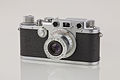 Leica IIIf chrom
 -
 Hasselblad 500 CM
 -
 Reflex camera simple labels
 -
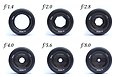 Lenses with different apertures
 -
 Daisies Focus
 -
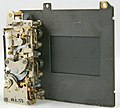 Focal-plane shutter
 -
 Sekonic L-358 Flash Master
 -
 Nikon D200 front
 -
 Studijski fotoaparat
 -
 Hasselblad 503


.jpg)


Ad. Transform your health with W8MD Weight Loss, Sleep & MedSpa

Tired of being overweight?
Special offer:
Budget GLP-1 weight loss medications
- Semaglutide starting from $29.99/week and up with insurance for visit of $59.99 and up per week self pay.
- Tirzepatide starting from $45.00/week and up (dose dependent) or $69.99/week and up self pay
✔ Same-week appointments, evenings & weekends
Learn more:
- GLP-1 weight loss clinic NYC
- W8MD's NYC medical weight loss
- W8MD Philadelphia GLP-1 shots
- Philadelphia GLP-1 injections
- Affordable GLP-1 shots NYC
|
WikiMD Medical Encyclopedia |
Medical Disclaimer: WikiMD is for informational purposes only and is not a substitute for professional medical advice. Content may be inaccurate or outdated and should not be used for diagnosis or treatment. Always consult your healthcare provider for medical decisions. Verify information with trusted sources such as CDC.gov and NIH.gov. By using this site, you agree that WikiMD is not liable for any outcomes related to its content. See full disclaimer.
Credits:Most images are courtesy of Wikimedia commons, and templates, categories Wikipedia, licensed under CC BY SA or similar.
Translate this page: - East Asian
中文,
日本,
한국어,
South Asian
हिन्दी,
தமிழ்,
తెలుగు,
Urdu,
ಕನ್ನಡ,
Southeast Asian
Indonesian,
Vietnamese,
Thai,
မြန်မာဘာသာ,
বাংলা
European
español,
Deutsch,
français,
Greek,
português do Brasil,
polski,
română,
русский,
Nederlands,
norsk,
svenska,
suomi,
Italian
Middle Eastern & African
عربى,
Turkish,
Persian,
Hebrew,
Afrikaans,
isiZulu,
Kiswahili,
Other
Bulgarian,
Hungarian,
Czech,
Swedish,
മലയാളം,
मराठी,
ਪੰਜਾਬੀ,
ગુજરાતી,
Portuguese,
Ukrainian
