Camachile cookie
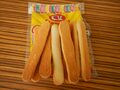
Camachile cookie is a traditional Filipino cookie named after the Camachile tree, also known as Pithecellobium dulce. The cookie is shaped to resemble the tree's seed pods, which are distinctive for their spiral, twisted shape.
Origin and History[edit]
The Camachile cookie is believed to have originated in the Philippines, where the Camachile tree is native. The tree's seed pods have been a part of the local diet for centuries, and the cookie was likely developed as a way to pay homage to this important food source.
Ingredients and Preparation[edit]
The primary ingredients in a Camachile cookie are flour, sugar, butter, and eggs. Some recipes also include vanilla extract for additional flavor. The dough is typically rolled out and then shaped into the distinctive spiral form of the Camachile seed pod before being baked.
Cultural Significance[edit]
In the Philippines, the Camachile cookie is often associated with celebrations and special occasions. It is also a popular choice for pasalubong, a tradition of bringing home gifts when returning from a trip.
See Also[edit]

-
 Bitsu-Bitsu Desserts Breads Cuisine of the Philippines


Medical Disclaimer: WikiMD is for informational purposes only and is not a substitute for professional medical advice. Content may be inaccurate or outdated and should not be used for diagnosis or treatment. Always consult your healthcare provider for medical decisions. Verify information with trusted sources such as CDC.gov and NIH.gov. By using this site, you agree that WikiMD is not liable for any outcomes related to its content. See full disclaimer.
Credits:Most images are courtesy of Wikimedia commons, and templates, categories Wikipedia, licensed under CC BY SA or similar.
Translate page: - East Asian
中文,
日本,
한국어,
South Asian
हिन्दी,
தமிழ்,
తెలుగు,
Urdu,
ಕನ್ನಡ,
Southeast Asian
Indonesian,
Vietnamese,
Thai,
မြန်မာဘာသာ,
বাংলা
European
español,
Deutsch,
français,
Greek,
português do Brasil,
polski,
română,
русский,
Nederlands,
norsk,
svenska,
suomi,
Italian
Middle Eastern & African
عربى,
Turkish,
Persian,
Hebrew,
Afrikaans,
isiZulu,
Kiswahili,
Other
Bulgarian,
Hungarian,
Czech,
Swedish,
മലയാളം,
मराठी,
ਪੰਜਾਬੀ,
ગુજરાતી,
Portuguese,
Ukrainian

