Calvatia gigantea
Calvatia gigantea, commonly known as the giant puffball, is a species of puffball mushroom in the family Agaricaceae. It is notable for its large size and distinctive appearance. The fruiting body of Calvatia gigantea can grow to be quite large, often reaching diameters of 10 to 70 centimeters (4 to 28 inches) and weights of several kilograms.
Description[edit]
Calvatia gigantea is characterized by its large, white, spherical fruiting body. The outer surface is smooth and may become cracked with age. When young, the interior of the puffball is solid and white, but as it matures, the interior turns into a mass of spores. The spores are released through an opening that develops in the outer skin.
Habitat[edit]
This species is commonly found in meadows, fields, and deciduous forests. It tends to grow in nutrient-rich soil and is often found in groups. Calvatia gigantea is widely distributed across temperate regions of the world.
Edibility[edit]
The giant puffball is edible when young and the interior is still white. It is important to ensure that the mushroom is not mistaken for other, potentially toxic, species. The flesh of the young puffball can be sliced and cooked in various ways, often being compared to tofu in texture.
Life Cycle[edit]
The life cycle of Calvatia gigantea begins with the germination of spores. The spores develop into mycelium, which grows underground. When conditions are favorable, the mycelium produces the fruiting body, which emerges above ground. The fruiting body matures, releases spores, and the cycle begins anew.
Related Species[edit]
Calvatia gigantea is part of the genus Calvatia, which includes several other species of puffballs. Some related species include:
Related Pages[edit]
-
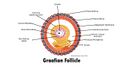 Graafian Follicle Labelled


Medical Disclaimer: WikiMD is for informational purposes only and is not a substitute for professional medical advice. Content may be inaccurate or outdated and should not be used for diagnosis or treatment. Always consult your healthcare provider for medical decisions. Verify information with trusted sources such as CDC.gov and NIH.gov. By using this site, you agree that WikiMD is not liable for any outcomes related to its content. See full disclaimer.
Credits:Most images are courtesy of Wikimedia commons, and templates, categories Wikipedia, licensed under CC BY SA or similar.
Translate page: - East Asian
中文,
日本,
한국어,
South Asian
हिन्दी,
தமிழ்,
తెలుగు,
Urdu,
ಕನ್ನಡ,
Southeast Asian
Indonesian,
Vietnamese,
Thai,
မြန်မာဘာသာ,
বাংলা
European
español,
Deutsch,
français,
Greek,
português do Brasil,
polski,
română,
русский,
Nederlands,
norsk,
svenska,
suomi,
Italian
Middle Eastern & African
عربى,
Turkish,
Persian,
Hebrew,
Afrikaans,
isiZulu,
Kiswahili,
Other
Bulgarian,
Hungarian,
Czech,
Swedish,
മലയാളം,
मराठी,
ਪੰਜਾਬੀ,
ગુજરાતી,
Portuguese,
Ukrainian

