Cake decorating
Cake Decorating is the art of using edible materials to embellish and beautify cakes. It is a skill that combines culinary arts with visual design, creating a dessert that is as pleasing to the eye as it is to the palate.
Etymology[edit]
The term "cake decorating" is derived from the English words "cake", which is a sweet baked food, and "decorating", which means to make something look more attractive by adding extra items or images to it.
Techniques[edit]
There are several techniques used in cake decorating. These include:
- Piping: This involves using a bag and various types of tips to create different shapes and designs on the cake. It is one of the most common techniques used in cake decorating.
- Fondant: This is a type of icing that can be rolled out and used to cover the cake. It provides a smooth and polished finish, and can also be used to create decorative shapes and figures.
- Gum paste: This is a type of dough that can be rolled out very thin and used to create lifelike flowers and other decorations.
- Royal icing: This is a hard white icing, made from softly beaten egg whites, icing sugar, and sometimes lemon or lime juice. It is used to create intricate designs and decorations.
- Marzipan: This is a sweet paste made from ground almonds, sugar, and egg whites. It can be used to cover cakes and create decorations.
- Modeling chocolate: This is a type of chocolate that can be molded into different shapes and used to create decorations.
Related Terms[edit]
- Bakery: A place where cakes and other baked goods are made and sold.
- Pastry chef: A professional who specializes in making desserts, especially cakes and pastries.
- Sugarcraft: The art of creating decorative pieces from sugar and other edible materials.
See Also[edit]

This WikiMD article can only be edited by registered and verified editors. You can log in or register.
-
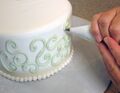 Piping buttercream onto cake
 -
 Biddenden Maids Cake
 -
 Fondant rosette
 -
 Gumpaste bow
 -
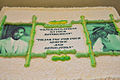 Retirement cake for Guantanamo's last two Cuban commuters
 -
 Oreo cake
 -
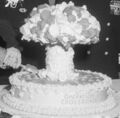 "Operation Crossroads" atomic bomb mushroom cloud cake
 -
 Child's dress cake


.jpg)


Medical Disclaimer: WikiMD is for informational purposes only and is not a substitute for professional medical advice. Content may be inaccurate or outdated and should not be used for diagnosis or treatment. Always consult your healthcare provider for medical decisions. Verify information with trusted sources such as CDC.gov and NIH.gov. By using this site, you agree that WikiMD is not liable for any outcomes related to its content. See full disclaimer.
Credits:Most images are courtesy of Wikimedia commons, and templates, categories Wikipedia, licensed under CC BY SA or similar.
Translate page: - East Asian
中文,
日本,
한국어,
South Asian
हिन्दी,
தமிழ்,
తెలుగు,
Urdu,
ಕನ್ನಡ,
Southeast Asian
Indonesian,
Vietnamese,
Thai,
မြန်မာဘာသာ,
বাংলা
European
español,
Deutsch,
français,
Greek,
português do Brasil,
polski,
română,
русский,
Nederlands,
norsk,
svenska,
suomi,
Italian
Middle Eastern & African
عربى,
Turkish,
Persian,
Hebrew,
Afrikaans,
isiZulu,
Kiswahili,
Other
Bulgarian,
Hungarian,
Czech,
Swedish,
മലയാളം,
मराठी,
ਪੰਜਾਬੀ,
ગુજરાતી,
Portuguese,
Ukrainian

