Bulb of vestibule
The bulb of vestibule or vestibular bulb is a part of the female reproductive system. It is a body of erectile tissue situated on either side of the vagina and urethra.
Anatomy[edit]
The bulb of vestibule is a paired, elongated mass of erectile tissue which is part of the clitoris. It is homologous to the corpus spongiosum in males. The bulbs are located on either side of the vaginal opening and extend from the base of the clitoral glans backwards along the sides of the vagina and urethra to the lower part of the pubic symphysis.
The bulbs are covered by the bulbospongiosus muscle which contracts during sexual arousal, causing the bulbs to engorge with blood and the vaginal opening to narrow. This aids in sexual stimulation and orgasm.
Function[edit]
The primary function of the bulb of vestibule is sexual arousal. During sexual arousal, the bulbs fill with blood, causing them to swell and the vaginal opening to narrow. This aids in sexual stimulation and orgasm. The bulbs also play a role in the lubrication of the vagina during sexual activity.
Clinical significance[edit]
The bulb of vestibule is a significant structure in female sexual response and is often involved in conditions affecting sexual function. It may be affected by various conditions such as vaginismus, dyspareunia (pain during sexual intercourse), and vulvodynia (chronic vulvar pain).
Etymology[edit]
The term "bulb of vestibule" is derived from the Latin word "bulbus", meaning a bulbous plant, and "vestibulum", meaning an entrance or hallway. The term refers to the bulbous shape of the structure and its location near the entrance of the vagina.
See also[edit]

This WikiMD article can only be edited by registered and verified editors. You can log in or register.
-
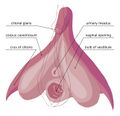 Clitoral anatomy updated
 -
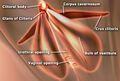 EdSim Clitoris anatomy
 -
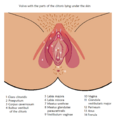 Vulva and Clitoris
 -
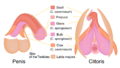 Clitoris Penis Homology


Advertise on WikiMD — 81,000+ full articles, ~900,000 total pages, ~250 million page views. Global reach, limited time promotional rates from $1/page/day. Learn more · View stats

Translate page: - East Asian
中文,
日本,
한국어,
South Asian
हिन्दी,
தமிழ்,
తెలుగు,
Urdu,
ಕನ್ನಡ,
Southeast Asian
Indonesian,
Vietnamese,
Thai,
မြန်မာဘာသာ,
বাংলা
European
español,
Deutsch,
français,
Greek,
português do Brasil,
polski,
română,
русский,
Nederlands,
norsk,
svenska,
suomi,
Italian
Middle Eastern & African
عربى,
Turkish,
Persian,
Hebrew,
Afrikaans,
isiZulu,
Kiswahili,
Other
Bulgarian,
Hungarian,
Czech,
Swedish,
മലയാളം,
मराठी,
ਪੰਜਾਬੀ,
ગુજરાતી,
Portuguese,
Ukrainian
About WikiMD • Contact • Disclaimer • Privacy • Copyright • Site statistics
Some content and images may originate from Wikimedia Commons or Wikipedia and remain subject to their stated licenses. Unless otherwise noted, eligible WikiMD content is available under CC BY-SA 4.0.
WikiMD Wellnesspedia — Free health & wellness information for patients, students, and health professionals.

