Breakfast sausage
| Alternative names | |
| Type | |
| Course | |
| Place of origin | |
| Region or state | |
| Associated national cuisine | |
| Created by | |
| Invented | |
| Cooking time | minutes to minutes |
| Serving temperature | |
| Main ingredients | |
| Ingredients generally used | |
| Variations | |
| Food energy | kcal |
| Nutritional value | Protein: g, Fat: g, Carbohydrate: g |
| Glycemic index | |
| Similar dishes | |
| Other information | |
| Website | [ Official website] |
Breakfast sausage is a type of sausage commonly consumed during breakfast. It is a popular breakfast food in many countries, including the United States, United Kingdom, and Canada.
History[edit]
The origins of breakfast sausage can be traced back to ancient times. Sausages were a common food in ancient civilizations, and the practice of consuming sausages for breakfast dates back to at least the Roman Empire. The Romans were known to enjoy a variety of sausages, including those made from pork, beef, and even fish.
Ingredients and Preparation[edit]
Breakfast sausages are typically made from ground meat, such as pork, beef, or a combination of both. The meat is seasoned with a variety of spices, including salt, pepper, sage, and thyme, to give it a flavorful taste. Other ingredients, such as breadcrumbs, eggs, and milk, may also be added to enhance the texture and flavor of the sausage.
The ground meat and seasonings are mixed together thoroughly, and then stuffed into casings or formed into patties. The sausages are then cooked by grilling, frying, or baking until they are fully cooked and have a golden brown color.
Variations[edit]
There are many variations of breakfast sausage, each with its own unique flavor and characteristics. Some popular variations include:
- Pork Sausage: Made exclusively from pork, this type of breakfast sausage is known for its rich and savory flavor.
- Beef Sausage: Made from beef, this variation has a slightly different taste compared to pork sausage.
- Turkey Sausage: A healthier alternative, turkey sausage is made from ground turkey meat and is lower in fat and calories compared to pork or beef sausage.
- Vegetarian Sausage: For those following a vegetarian or vegan diet, there are also plant-based breakfast sausages available, made from ingredients such as soy, tofu, or seitan.
Serving and Consumption[edit]
Breakfast sausages are typically served alongside other breakfast items such as eggs, toast, and hash browns. They can be enjoyed on their own or used as a filling for breakfast sandwiches or wraps. Some people also enjoy adding breakfast sausages to their breakfast burritos or casseroles for added flavor.
Nutritional Information[edit]
The nutritional content of breakfast sausages can vary depending on the type and brand. On average, a serving of breakfast sausage (approximately 2 links or 3 ounces) contains around 200-300 calories, 15-20 grams of protein, 15-20 grams of fat, and 1-5 grams of carbohydrates. It is important to note that these values may vary, so it is always recommended to check the packaging for accurate nutritional information.
See Also[edit]
References[edit]
-
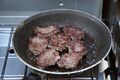 Breakfast sausage
 -
 Breakfast sausage at Ye Olde Cottage Restaurant, Weston MA


Sponsored Health Resource

W8MD Weight Loss, Sleep & MedSpa
Looking for physician-supervised weight loss, semaglutide, tirzepatide, or GLP-1 receptor agonist options? W8MD helps eligible patients in New York City, Brooklyn, New Jersey, Connecticut, Pennsylvania, Delaware, and greater Philadelphia with medical weight loss, sleep medicine, and long-term maintenance support.
GLP-1 specials: Affordable GLP-1 injections NYC and Philadelphia starting from $29.99/week and up for semaglutide with insurance accepted for qualifying visits, and $45/week and up for tirzepatide with insurance accepted for qualifying visits. Self-pay options start from $59.99/week and up for semaglutide and $69.99/week and up for tirzepatide.
Medical weight loss NYC | Affordable GLP-1 injections NYC | Budget GLP-1 weight loss shots Philadelphia | New Jersey medical weight loss | NYC medical weight loss | Philadelphia medical weight loss | Sleep clinic NYC | W8MD's Philadelphia GLP-1 doctor | Weight loss prescriptions NYC
Book a W8MD appointment · View GLP-1 specials
Paid promotional message. Eligibility, pricing, insurance coverage, medication availability, and results vary. Medical evaluation required.

Medical Disclaimer: WikiMD is for informational purposes only and is not a substitute for professional medical advice. Content may be inaccurate or outdated and should not be used for diagnosis or treatment. Always consult your healthcare provider for medical decisions. Verify information with trusted sources such as CDC.gov and NIH.gov. By using this site, you agree that WikiMD is not liable for any outcomes related to its content. See full disclaimer.
Credits:Most images are courtesy of Wikimedia commons, and templates, categories Wikipedia, licensed under CC BY SA or similar.
Translate page: - East Asian
中文,
日本,
한국어,
South Asian
हिन्दी,
தமிழ்,
తెలుగు,
Urdu,
ಕನ್ನಡ,
Southeast Asian
Indonesian,
Vietnamese,
Thai,
မြန်မာဘာသာ,
বাংলা
European
español,
Deutsch,
français,
Greek,
português do Brasil,
polski,
română,
русский,
Nederlands,
norsk,
svenska,
suomi,
Italian
Middle Eastern & African
عربى,
Turkish,
Persian,
Hebrew,
Afrikaans,
isiZulu,
Kiswahili,
Other
Bulgarian,
Hungarian,
Czech,
Swedish,
മലയാളം,
मराठी,
ਪੰਜਾਬੀ,
ગુજરાતી,
Portuguese,
Ukrainian

