Bramley apple
Bramley apple
The Bramley apple is a variety of apple that is particularly popular in the United Kingdom for cooking purposes. It is known for its tart flavor and is often used in apple pie, apple sauce, and other culinary applications.
History[edit]
The Bramley apple originated in the early 19th century in Nottinghamshire, England. The first tree was grown from seeds planted by a young girl named Mary Ann Brailsford in 1809. The apples gained popularity when a local nurseryman, Henry Merryweather, began to propagate the tree commercially in the 1850s.
Characteristics[edit]
Bramley apples are large, with a green skin that can develop a red blush. They have a firm texture and a high acid content, which makes them ideal for cooking. When cooked, they break down to a smooth puree, making them perfect for baking and sauces.
Cultivation[edit]
Bramley apples are typically grown in temperate climates. They require a pollinator to produce fruit, as they are not self-fertile. Common pollinators include other apple varieties such as Cox's Orange Pippin and Egremont Russet.
Uses[edit]
The Bramley apple is primarily used in cooking due to its tartness. It is a popular choice for apple pie, crumble, and tarts. The apple's high acidity and low sugar content make it less suitable for eating raw compared to dessert apples.
Nutritional Information[edit]
Bramley apples are a good source of vitamin C and dietary fiber. They are low in calories and contain no fat, making them a healthy choice for various dishes.
See also[edit]
References[edit]
External links[edit]
-
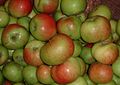 004 Bramley
 -
Crimson Bramley on tree, National Fruit Collection
-
Brimley Apples
-
Maythorne Orchard
-
 Bramley Tree Cottage


Medical Disclaimer: WikiMD is for informational purposes only and is not a substitute for professional medical advice. Content may be inaccurate or outdated and should not be used for diagnosis or treatment. Always consult your healthcare provider for medical decisions. Verify information with trusted sources such as CDC.gov and NIH.gov. By using this site, you agree that WikiMD is not liable for any outcomes related to its content. See full disclaimer.
Credits:Most images are courtesy of Wikimedia commons, and templates, categories Wikipedia, licensed under CC BY SA or similar.
Translate page: - East Asian
中文,
日本,
한국어,
South Asian
हिन्दी,
தமிழ்,
తెలుగు,
Urdu,
ಕನ್ನಡ,
Southeast Asian
Indonesian,
Vietnamese,
Thai,
မြန်မာဘာသာ,
বাংলা
European
español,
Deutsch,
français,
Greek,
português do Brasil,
polski,
română,
русский,
Nederlands,
norsk,
svenska,
suomi,
Italian
Middle Eastern & African
عربى,
Turkish,
Persian,
Hebrew,
Afrikaans,
isiZulu,
Kiswahili,
Other
Bulgarian,
Hungarian,
Czech,
Swedish,
മലയാളം,
मराठी,
ਪੰਜਾਬੀ,
ગુજરાતી,
Portuguese,
Ukrainian


.jpg)

