Bovine somatotropin
Bovine somatotropin (also known as BST or bST) is a protein hormone produced in the pituitary glands of cattle. It is involved in the regulation of growth and development in cows, particularly in the production of milk.
Production and Use[edit]
BST is produced synthetically through recombinant DNA technology and is used in the dairy industry to increase milk production in cows. The use of BST in dairy cows can increase milk production by 10-15%. The hormone is administered to cows through injections, typically every two weeks.
Controversy[edit]
The use of BST in dairy production has been a subject of controversy. Critics argue that the use of BST can lead to health problems in cows, including an increased risk of mastitis, a painful infection of the udder. There are also concerns about the potential impact on human health, although the Food and Drug Administration (FDA) has stated that milk from BST-treated cows is safe for human consumption.
Regulation[edit]
In the United States, the FDA approved the use of BST in 1993. However, the use of BST is banned in many other countries, including the European Union and Canada, due to animal welfare concerns.
See Also[edit]
References[edit]

This WikiMD article can only be edited by registered and verified editors. You can log in or register.
-
Holstein dairy cows
-
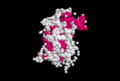 Somatotropine


Medical Disclaimer: WikiMD is for informational purposes only and is not a substitute for professional medical advice. Content may be inaccurate or outdated and should not be used for diagnosis or treatment. Always consult your healthcare provider for medical decisions. Verify information with trusted sources such as CDC.gov and NIH.gov. By using this site, you agree that WikiMD is not liable for any outcomes related to its content. See full disclaimer.
Credits:Most images are courtesy of Wikimedia commons, and templates, categories Wikipedia, licensed under CC BY SA or similar.
Translate page: - East Asian
中文,
日本,
한국어,
South Asian
हिन्दी,
தமிழ்,
తెలుగు,
Urdu,
ಕನ್ನಡ,
Southeast Asian
Indonesian,
Vietnamese,
Thai,
မြန်မာဘာသာ,
বাংলা
European
español,
Deutsch,
français,
Greek,
português do Brasil,
polski,
română,
русский,
Nederlands,
norsk,
svenska,
suomi,
Italian
Middle Eastern & African
عربى,
Turkish,
Persian,
Hebrew,
Afrikaans,
isiZulu,
Kiswahili,
Other
Bulgarian,
Hungarian,
Czech,
Swedish,
മലയാളം,
मराठी,
ਪੰਜਾਬੀ,
ગુજરાતી,
Portuguese,
Ukrainian


