Benzilylcholine mustard
Benzilylcholine mustard (BCM) is a neurotoxin that is used in scientific research to induce neuronal degeneration. It is a derivative of benzylcholine, and acts by irreversibly binding to and inactivating the acetylcholine receptor.
Mechanism of action[edit]
BCM acts by binding irreversibly to the acetylcholine receptor, thereby inactivating it. This leads to a decrease in the number of functional acetylcholine receptors, which in turn leads to a decrease in the ability of the neuron to respond to acetylcholine. This can result in a variety of effects, including neuronal degeneration and muscle weakness.
Use in research[edit]
BCM is used in scientific research to study the effects of neuronal degeneration. It is often used in studies of neurodegenerative diseases, such as Alzheimer's disease and Parkinson's disease, as it can be used to induce a state similar to these diseases in laboratory animals.
Safety[edit]
As a neurotoxin, BCM is highly toxic and must be handled with care. It can cause severe health effects if ingested, inhaled, or absorbed through the skin. It is classified as a hazardous substance and must be handled and disposed of in accordance with local regulations.
See also[edit]
 | This neuroscience article is a stub. You can help WikiMD by expanding the page. |
 | This toxicology-related article is a stub. You can help WikiMD by expanding the page. |
Benzilylcholine mustard gallery[edit]
-
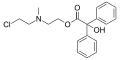 Benzilylcholine mustard

Advertise on WikiMD — 81,000+ full articles, ~900,000 total pages, ~250 million page views. Global reach, limited time promotional rates from $1/page/day. Learn more · View stats

Medical Disclaimer: WikiMD is for informational purposes only and is not a substitute for professional medical advice. Content may be inaccurate or outdated and should not be used for diagnosis or treatment. Always consult your healthcare provider for medical decisions. Verify information with trusted sources such as CDC.gov and NIH.gov. By using this site, you agree that WikiMD is not liable for any outcomes related to its content. See full disclaimer.
Credits:Most images are courtesy of Wikimedia commons, and templates, categories Wikipedia, licensed under CC BY SA or similar.
Translate page: - East Asian
中文,
日本,
한국어,
South Asian
हिन्दी,
தமிழ்,
తెలుగు,
Urdu,
ಕನ್ನಡ,
Southeast Asian
Indonesian,
Vietnamese,
Thai,
မြန်မာဘာသာ,
বাংলা
European
español,
Deutsch,
français,
Greek,
português do Brasil,
polski,
română,
русский,
Nederlands,
norsk,
svenska,
suomi,
Italian
Middle Eastern & African
عربى,
Turkish,
Persian,
Hebrew,
Afrikaans,
isiZulu,
Kiswahili,
Other
Bulgarian,
Hungarian,
Czech,
Swedish,
മലയാളം,
मराठी,
ਪੰਜਾਬੀ,
ગુજરાતી,
Portuguese,
Ukrainian

