Bean dip
Bean Dip is a type of dip made primarily from beans. It is a popular dish in many cultures around the world, particularly in Mexican cuisine and Tex-Mex cuisine.
Ingredients and Preparation[edit]
The primary ingredient in bean dip is beans, which can be any variety including black beans, pinto beans, or kidney beans. Other common ingredients include onion, garlic, chili peppers, and tomatoes. Some recipes may also include cheese, sour cream, or avocado.
To prepare bean dip, the beans are first cooked until soft. They are then mashed or blended to create a smooth or chunky texture, depending on personal preference. The other ingredients are added and mixed in to create a flavorful dip.
Serving and Consumption[edit]
Bean dip is typically served cold or at room temperature, although some variations may be served warm. It is often served with tortilla chips, but can also be used as a spread on sandwiches or a topping on tacos or nachos.
Variations[edit]
There are many variations of bean dip around the world. In Mexican cuisine, a popular variation is refried beans dip, which is made by frying mashed beans in lard or oil. In Middle Eastern cuisine, a similar dish is hummus, which is made from mashed chickpeas.
Health Benefits[edit]
Beans are a good source of protein and fiber, making bean dip a nutritious snack option. However, the nutritional value can vary depending on the other ingredients used in the dip.
See Also[edit]

-
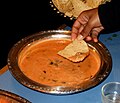 Bean dip with tortilla chips
 -
 Black bean dips
 -
 Nigella Lawson’s red kidney bean dip
 -
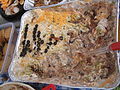 7-layer bean dip
 -
 7 Layer Bean Dip
 -
 Parmesan & white bean dip
 -
 Herbed white bean dip with crudités
 -
 Viet soft rolls with a black bean dipping sauce
 -
 Bissara (Moroccan Dip)
 -
 Roasted Red Pepper White Bean Dip
 -
 White bean dip with garnish
 -
 Black bean dip


.JPG)


Medical Disclaimer: WikiMD is for informational purposes only and is not a substitute for professional medical advice. Content may be inaccurate or outdated and should not be used for diagnosis or treatment. Always consult your healthcare provider for medical decisions. Verify information with trusted sources such as CDC.gov and NIH.gov. By using this site, you agree that WikiMD is not liable for any outcomes related to its content. See full disclaimer.
Credits:Most images are courtesy of Wikimedia commons, and templates, categories Wikipedia, licensed under CC BY SA or similar.
Translate this page: - East Asian
中文,
日本,
한국어,
South Asian
हिन्दी,
தமிழ்,
తెలుగు,
Urdu,
ಕನ್ನಡ,
Southeast Asian
Indonesian,
Vietnamese,
Thai,
မြန်မာဘာသာ,
বাংলা
European
español,
Deutsch,
français,
Greek,
português do Brasil,
polski,
română,
русский,
Nederlands,
norsk,
svenska,
suomi,
Italian
Middle Eastern & African
عربى,
Turkish,
Persian,
Hebrew,
Afrikaans,
isiZulu,
Kiswahili,
Other
Bulgarian,
Hungarian,
Czech,
Swedish,
മലയാളം,
मराठी,
ਪੰਜਾਬੀ,
ગુજરાતી,
Portuguese,
Ukrainian
