Bacterial microcompartment
Bacterial microcompartments (BMCs) are protein-based organelles found in a wide range of bacteria. They serve as specialized compartments for various metabolic processes, encapsulating specific enzymes and substrates to enhance reaction efficiency and protect the cell from toxic intermediates. BMCs are notable for their icosahedral or quasi-icosahedral symmetry and are composed of thousands of protein subunits. They are a key example of the complexity and adaptability of bacterial cells, illustrating how prokaryotes can compartmentalize functions in a manner somewhat analogous to the organelles of eukaryotic cells.
Structure and Function[edit]
The structure of BMCs is defined by a protein shell that encapsulates enzymes involved in a specific metabolic pathway. The shell is primarily made up of hexameric and pentameric proteins that form a facetted surface, with pores that allow the selective passage of substrates, products, and cofactors. The most well-studied BMCs are those involved in carbon fixation, the anabolism of ethanolamine, and the degradation of propanediol.
Carbon Fixation BMCs[edit]
In cyanobacteria and some chemolithoautotrophs, BMCs encapsulate enzymes of the Calvin cycle, enhancing the efficiency of carbon fixation by concentrating CO2 and excluding oxygen, which can interfere with the enzyme RuBisCO.
Ethanolamine Utilization[edit]
Certain pathogenic bacteria, such as Salmonella and Escherichia coli, contain BMCs that metabolize ethanolamine, using it as a nitrogen and carbon source. This process is crucial for their survival in the gut, where ethanolamine is available from the breakdown of phospholipids.
Propanediol Utilization[edit]
BMCs involved in the degradation of 1,2-propanediol are found in several bacterial species. This pathway produces propionate and propanol, which can be used as carbon and energy sources. The encapsulation of this pathway helps to sequester the toxic intermediate, propionaldehyde.
Biotechnological Applications[edit]
The modular nature of BMCs and their ability to encapsulate specific metabolic pathways have made them a target for biotechnology. Efforts are underway to engineer BMCs to improve biofuel production, carbon capture, and the synthesis of valuable chemicals. By introducing synthetic BMCs into industrial microorganisms, researchers aim to create more efficient and robust production strains.
Evolution[edit]
The evolutionary origin of BMCs is a subject of ongoing research. It is believed that they evolved through the duplication and divergence of a primordial protein, leading to the diverse array of BMCs observed today. Their widespread presence in bacteria suggests an ancient origin and a significant evolutionary advantage in certain environments.
See Also[edit]

 | This medical article is a stub. You can help WikiMD by expanding the page. |
Bacterial_microcompartment[edit]
-
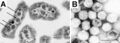 Carboxysomes EM
 -
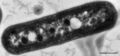 Synechococcus elongatus PCC 7942 electron micrograph showing carboxysomes


Sponsored Health Resource

W8MD Weight Loss, Sleep & MedSpa
Looking for physician-supervised weight loss, semaglutide, tirzepatide, or GLP-1 receptor agonist options? W8MD helps eligible patients in New York City, Brooklyn, New Jersey, Connecticut, Pennsylvania, Delaware, and greater Philadelphia with medical weight loss, sleep medicine, and long-term maintenance support.
GLP-1 specials: Affordable GLP-1 injections NYC and Philadelphia starting from $29.99/week and up for semaglutide with insurance accepted for qualifying visits, and $45/week and up for tirzepatide with insurance accepted for qualifying visits. Self-pay options start from $59.99/week and up for semaglutide and $69.99/week and up for tirzepatide.
- Medical weight loss NYC
- Affordable GLP-1 injections NYC
- Budget GLP-1 weight loss shots Philadelphia
- New Jersey medical weight loss
- NYC medical weight loss blog
- Philadelphia weight loss blog
- Sleep medicine and sleep apnea services
- W8MD MedSpa and wellness
Book a W8MD appointment · View GLP-1 specials
Paid promotional message. Eligibility, pricing, insurance coverage, medication availability, and results vary. Medical evaluation required.

Medical Disclaimer: WikiMD is for informational purposes only and is not a substitute for professional medical advice. Content may be inaccurate or outdated and should not be used for diagnosis or treatment. Always consult your healthcare provider for medical decisions. Verify information with trusted sources such as CDC.gov and NIH.gov. By using this site, you agree that WikiMD is not liable for any outcomes related to its content. See full disclaimer.
Credits:Most images are courtesy of Wikimedia commons, and templates, categories Wikipedia, licensed under CC BY SA or similar.
Translate page: - East Asian
中文,
日本,
한국어,
South Asian
हिन्दी,
தமிழ்,
తెలుగు,
Urdu,
ಕನ್ನಡ,
Southeast Asian
Indonesian,
Vietnamese,
Thai,
မြန်မာဘာသာ,
বাংলা
European
español,
Deutsch,
français,
Greek,
português do Brasil,
polski,
română,
русский,
Nederlands,
norsk,
svenska,
suomi,
Italian
Middle Eastern & African
عربى,
Turkish,
Persian,
Hebrew,
Afrikaans,
isiZulu,
Kiswahili,
Other
Bulgarian,
Hungarian,
Czech,
Swedish,
മലയാളം,
मराठी,
ਪੰਜਾਬੀ,
ગુજરાતી,
Portuguese,
Ukrainian

