Artificial urinary sphincter
Arable Land[edit]

Arable land is a term used to describe land that is suitable for growing crops. It is a critical component of agriculture and food production, providing the necessary space and soil conditions for the cultivation of various crops. Arable land is distinct from pasture land, which is used primarily for grazing livestock.
Characteristics[edit]
Arable land is characterized by its ability to support the growth of crops. This includes having fertile soil, adequate water supply, and a suitable climate. The fertility of the soil is often enhanced through the use of fertilizers and crop rotation to maintain its productivity. The availability of water, either through natural rainfall or irrigation, is essential for crop growth.
Global Distribution[edit]
The distribution of arable land varies significantly across the globe. Factors such as climate, topography, and soil type influence the amount of land that can be used for agriculture. Regions with temperate climates and flat terrain, such as parts of Europe and North America, tend to have higher proportions of arable land.
Agricultural Practices[edit]
In arable farming, various techniques are employed to maximize crop yield. These include plowing, sowing, harvesting, and crop rotation. Modern agriculture often involves the use of machinery and technology to increase efficiency and productivity.
Challenges[edit]
Arable land faces several challenges, including soil erosion, desertification, and urbanization. These factors can reduce the amount of land available for agriculture and threaten food security. Sustainable farming practices and land management strategies are essential to preserve arable land for future generations.
Related Pages[edit]
Gallery[edit]
-
Hills near Unin, Slovakia
-
Rural landscape in Spain
-
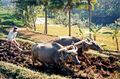 Javanese buffalo in a field
 -
Pasture land near Beverley Minster


Medical Disclaimer: WikiMD is for informational purposes only and is not a substitute for professional medical advice. Content may be inaccurate or outdated and should not be used for diagnosis or treatment. Always consult your healthcare provider for medical decisions. Verify information with trusted sources such as CDC.gov and NIH.gov. By using this site, you agree that WikiMD is not liable for any outcomes related to its content. See full disclaimer.
Credits:Most images are courtesy of Wikimedia commons, and templates, categories Wikipedia, licensed under CC BY SA or similar.
Translate page: - East Asian
中文,
日本,
한국어,
South Asian
हिन्दी,
தமிழ்,
తెలుగు,
Urdu,
ಕನ್ನಡ,
Southeast Asian
Indonesian,
Vietnamese,
Thai,
မြန်မာဘာသာ,
বাংলা
European
español,
Deutsch,
français,
Greek,
português do Brasil,
polski,
română,
русский,
Nederlands,
norsk,
svenska,
suomi,
Italian
Middle Eastern & African
عربى,
Turkish,
Persian,
Hebrew,
Afrikaans,
isiZulu,
Kiswahili,
Other
Bulgarian,
Hungarian,
Czech,
Swedish,
മലയാളം,
मराठी,
ਪੰਜਾਬੀ,
ગુજરાતી,
Portuguese,
Ukrainian


