Arterial tortuosity syndrome
| Arterial Tortuosity Syndrome | |
|---|---|
| Synonyms | N/A |
| Pronounce | N/A |
| Specialty | N/A |
| Symptoms | Arterial tortuosity, joint hypermobility, skin laxity, inguinal hernia |
| Complications | Aneurysm, stenosis |
| Onset | Congenital |
| Duration | Lifelong |
| Types | N/A |
| Causes | Genetic mutation in the SLC2A10 gene |
| Risks | Family history |
| Diagnosis | Genetic testing, clinical evaluation |
| Differential diagnosis | N/A |
| Prevention | N/A |
| Treatment | Surgical intervention, symptomatic management |
| Medication | N/A |
| Prognosis | N/A |
| Frequency | Rare |
| Deaths | N/A |
Arterial Tortuosity Syndrome (ATS) is a rare genetic disorder characterized by the elongation and tortuosity of the arteries. This condition is associated with mutations in the SLC2A10 gene, which encodes the GLUT10 protein, a member of the glucose transporter family.
Signs and Symptoms[edit]
Individuals with Arterial Tortuosity Syndrome often present with a variety of symptoms, including:
Complications can include the development of aneurysms and stenosis in affected arteries, which can lead to serious cardiovascular issues.
Genetics[edit]
Arterial Tortuosity Syndrome is inherited in an autosomal recessive manner. This means that an individual must inherit two copies of the mutated SLC2A10 gene, one from each parent, to be affected by the condition. Carriers, who have only one copy of the mutation, typically do not show symptoms.
Diagnosis[edit]
Diagnosis of ATS is based on clinical evaluation and confirmed through genetic testing. The presence of characteristic symptoms, along with a family history of the condition, can prompt genetic testing for mutations in the SLC2A10 gene.
Treatment[edit]
There is no cure for Arterial Tortuosity Syndrome, but treatment focuses on managing symptoms and preventing complications. This may include:
- Surgical intervention to correct arterial abnormalities
- Symptomatic management for joint and skin issues
See Also[edit]
References[edit]
External Links[edit]
- [Genetic and Rare Diseases Information Center - Arterial Tortuosity Syndrome]()
- [OMIM Entry - #208050 - ARTERIAL TORTUOSITY SYNDROME](https://www.omim.org/entry/208050)
Arterial tortuosity syndrome[edit]
-
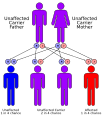 Arterial tortuosity syndrome
 -
 Arterial tortuosity syndrome
 -
 Arterial tortuosity syndrome


Medical Disclaimer: WikiMD is for informational purposes only and is not a substitute for professional medical advice. Content may be inaccurate or outdated and should not be used for diagnosis or treatment. Always consult your healthcare provider for medical decisions. Verify information with trusted sources such as CDC.gov and NIH.gov. By using this site, you agree that WikiMD is not liable for any outcomes related to its content. See full disclaimer.
Credits:Most images are courtesy of Wikimedia commons, and templates, categories Wikipedia, licensed under CC BY SA or similar.
Translate page: - East Asian
中文,
日本,
한국어,
South Asian
हिन्दी,
தமிழ்,
తెలుగు,
Urdu,
ಕನ್ನಡ,
Southeast Asian
Indonesian,
Vietnamese,
Thai,
မြန်မာဘာသာ,
বাংলা
European
español,
Deutsch,
français,
Greek,
português do Brasil,
polski,
română,
русский,
Nederlands,
norsk,
svenska,
suomi,
Italian
Middle Eastern & African
عربى,
Turkish,
Persian,
Hebrew,
Afrikaans,
isiZulu,
Kiswahili,
Other
Bulgarian,
Hungarian,
Czech,
Swedish,
മലയാളം,
मराठी,
ਪੰਜਾਬੀ,
ગુજરાતી,
Portuguese,
Ukrainian

