Animal embryonic development
Animal embryonic development, also known as embryogenesis, is the process by which the embryo forms and develops. It starts with the fertilization of an ovum, which is then followed by the formation of a zygote. The zygote undergoes rapid mitotic divisions with no significant growth, producing a blastula, which further develops into a gastrula.
Fertilization[edit]
Fertilization is the fusion of two gametes to form a zygote. The sperm and egg each contribute half the genetic material needed for the new individual. The process of fertilization and the formation of the zygote are the initiating events in the life history of the organism.
Cleavage[edit]
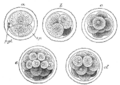
Following fertilization, the zygote begins to divide by mitosis in a process called cleavage. Cleavage is a series of rapid cell divisions that results in an increase in the number of cells but not their size. This process transforms the zygote into a small, multicellular organism, known as a blastula.
Gastrulation[edit]
Gastrulation is a significant phase in the embryonic development of most animals, during which the single-layered blastula is reorganized into a trilaminar ("three-layered") structure known as the gastrula. These three germ layers are known as the ectoderm, mesoderm, and endoderm.
Organogenesis[edit]
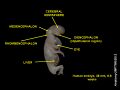
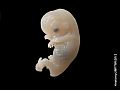
Organogenesis is the process by which the three germ layers formed from gastrulation develop into the internal organs of the organism. The cells interact and develop into complex tissues and organs, completing the formation of the three primary germ layers: ectoderm, mesoderm, and endoderm.
See also[edit]
References[edit]

-
 Animal_embryonic_development
 -
 Animal_embryonic_development
 -
 Animal_embryonic_development
 -
 Animal_embryonic_development
 -
 Animal_embryonic_development
 -
 Animal_embryonic_development


_(20661197932).jpg)


Medical Disclaimer: WikiMD is for informational purposes only and is not a substitute for professional medical advice. Content may be inaccurate or outdated and should not be used for diagnosis or treatment. Always consult your healthcare provider for medical decisions. Verify information with trusted sources such as CDC.gov and NIH.gov. By using this site, you agree that WikiMD is not liable for any outcomes related to its content. See full disclaimer.
Credits:Most images are courtesy of Wikimedia commons, and templates, categories Wikipedia, licensed under CC BY SA or similar.
Translate page: - East Asian
中文,
日本,
한국어,
South Asian
हिन्दी,
தமிழ்,
తెలుగు,
Urdu,
ಕನ್ನಡ,
Southeast Asian
Indonesian,
Vietnamese,
Thai,
မြန်မာဘာသာ,
বাংলা
European
español,
Deutsch,
français,
Greek,
português do Brasil,
polski,
română,
русский,
Nederlands,
norsk,
svenska,
suomi,
Italian
Middle Eastern & African
عربى,
Turkish,
Persian,
Hebrew,
Afrikaans,
isiZulu,
Kiswahili,
Other
Bulgarian,
Hungarian,
Czech,
Swedish,
മലയാളം,
मराठी,
ਪੰਜਾਬੀ,
ગુજરાતી,
Portuguese,
Ukrainian

