Amitriptyline/perphenazine
Amitriptyline/Perphenazine is a prescription medication used in the treatment of various mental health conditions. It is a combination of two drugs: amitriptyline, a tricyclic antidepressant, and perphenazine, a typical antipsychotic.
Indications[edit]
Amitriptyline/Perphenazine is primarily used to treat schizophrenia and bipolar disorder. It may also be used off-label for other conditions, such as major depressive disorder and anxiety disorders.
Mechanism of Action[edit]
Amitriptyline works by increasing the levels of certain chemicals in the brain that help improve mood, sleep, appetite, and energy level. Perphenazine works by blocking the action of dopamine, a neurotransmitter in the brain, which helps to reduce hallucinations and improve concentration.
Side Effects[edit]
Common side effects of Amitriptyline/Perphenazine include drowsiness, dizziness, dry mouth, constipation, and weight gain. Serious side effects may include increased heart rate, blurred vision, seizures, and suicidal thoughts.
Contraindications[edit]
Amitriptyline/Perphenazine should not be used in patients with a history of hypersensitivity to either amitriptyline or perphenazine, or in patients with certain heart conditions, liver disease, or glaucoma.
Interactions[edit]
Amitriptyline/Perphenazine may interact with other medications, including other antidepressants, antipsychotics, and certain heart medications. It is important to inform your healthcare provider of all medications you are currently taking.
Dosage and Administration[edit]
The dosage of Amitriptyline/Perphenazine is individualized based on the patient's condition and response to treatment. It is usually taken orally, once or twice daily.
See Also[edit]
 | This medical article is a stub. You can help WikiMD by expanding the page. |
-
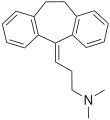 Chemical structure of Amitriptyline
 -
 Chemical structure of Perphenazine
 -
 Cabbage looper in cocoon


Advertise on WikiMD — 81,000+ full articles, ~900,000 total pages, ~250 million page views. Global reach, limited time promotional rates from $1/page/day. Learn more · View stats

Translate page: - East Asian
中文,
日本,
한국어,
South Asian
हिन्दी,
தமிழ்,
తెలుగు,
Urdu,
ಕನ್ನಡ,
Southeast Asian
Indonesian,
Vietnamese,
Thai,
မြန်မာဘာသာ,
বাংলা
European
español,
Deutsch,
français,
Greek,
português do Brasil,
polski,
română,
русский,
Nederlands,
norsk,
svenska,
suomi,
Italian
Middle Eastern & African
عربى,
Turkish,
Persian,
Hebrew,
Afrikaans,
isiZulu,
Kiswahili,
Other
Bulgarian,
Hungarian,
Czech,
Swedish,
മലയാളം,
मराठी,
ਪੰਜਾਬੀ,
ગુજરાતી,
Portuguese,
Ukrainian
About WikiMD • Contact • Disclaimer • Privacy • Copyright • Site statistics
Some content and images may originate from Wikimedia Commons or Wikipedia and remain subject to their stated licenses. Unless otherwise noted, eligible WikiMD content is available under CC BY-SA 4.0.
WikiMD Wellnesspedia — Free health & wellness information for patients, students, and health professionals.

