Teenage pregnancy

Editor-In-Chief: Prab R Tumpati, MD
Obesity, Sleep & Internal medicine
Founder, WikiMD Wellnesspedia &
W8MD's weight loss doctor NYC
Philadelphia GLP-1 weight loss and GLP-1 clinic NYC
| Teenage pregnancy | |
|---|---|
 | |
| Synonyms | N/A |
| Pronounce | N/A |
| Specialty | N/A |
| Symptoms | Pregnancy in a teenager |
| Complications | Preterm birth, low birth weight, anemia, preeclampsia, postpartum depression |
| Onset | Adolescence |
| Duration | Approximately 9 months |
| Types | N/A |
| Causes | Unprotected sex, sexual abuse, lack of education |
| Risks | Socioeconomic disadvantage, educational disruption, health risks for mother and child |
| Diagnosis | Pregnancy test, ultrasound |
| Differential diagnosis | N/A |
| Prevention | Sex education, contraception, abstinence |
| Treatment | Prenatal care, support services |
| Medication | N/A |
| Prognosis | Varies depending on healthcare access and support systems |
| Frequency | Varies by region; higher in developing countries |
| Deaths | Rare in developed countries, higher risk in developing regions |

Teenage pregnancy, also known as adolescent pregnancy, is characterized by females under the age of 20 becoming pregnant. This can happen through sexual intercourse after the onset of ovulation, which may start before the first menstrual period (menarche) but typically occurs afterwards. For well-nourished girls, the initial menstrual period generally starts around the age of 12 or 13.
Causes[edit]
The reasons for teenage pregnancy are multifaceted, typically involving a combination of societal, familial, and personal factors.
Societal Factors[edit]
A variety of societal factors can contribute to teenage pregnancy, including lower levels of education, higher poverty rates, and additional socioeconomic disadvantages. Societal norms and values concerning sexuality, use of contraceptives, and the acceptance of teenage childbirth also play significant roles.
Familial Factors[edit]
Factors within the family that may contribute include a familial history of teenage pregnancies, a lack of a robust support system, and negative family dynamics.
Individual Factors[edit]
Individual factors might include low self-esteem, a lack of knowledge or misinformation regarding sexual health and contraception, and engaging in risky behaviours. Substance use among adolescents has also been associated with a higher likelihood of pregnancy.
Consequences[edit]
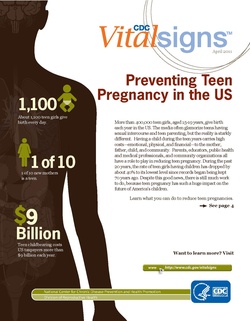
Teenage pregnancy can result in substantial social, health, and economic consequences for the pregnant teenager, her child, and society as a whole.
Health Consequences[edit]
Pregnant teenagers face an increased risk of medical complications, such as preterm birth, low birth weight, and other adverse perinatal outcomes. They are also more likely to struggle with mental health issues like depression and anxiety.
Economic Consequences[edit]
Teenage mothers are more likely to leave school early, attain lower levels of education, and face higher rates of poverty and unemployment. The children of teenage mothers are also more likely to grow up in economically disadvantaged circumstances, impacting their own long-term educational, economic, and health outcomes.
Prevention[edit]
Preventing teenage pregnancy requires a comprehensive approach, including sex education, access to contraceptive services, and a range of community, family, and individual support systems.
Sex Education[edit]
Comprehensive sex education covering topics such as contraceptive use, sexual health, and effective communication can help reduce the rate of teenage pregnancy.
Access to Contraception[edit]
Ensuring easy access to contraception, including emergency contraception, is vital in the prevention of adolescent pregnancies.
Community, Family, and Individual Supports[edit]
Support at the community level, including youth development programs, after-school activities, and community-based health services, can contribute to the prevention of teenage pregnancies. Support from family members and open communication about sex and contraception can also help reduce the risk of adolescent pregnancies.
See Also[edit]

Sponsored Health Resource

W8MD Weight Loss, Sleep & MedSpa
Looking for physician-supervised weight loss, semaglutide, tirzepatide, or GLP-1 receptor agonist options? W8MD helps eligible patients in New York City, Brooklyn, New Jersey, Connecticut, Pennsylvania, Delaware, and greater Philadelphia with medical weight loss, sleep medicine, and long-term maintenance support.
GLP-1 specials: Affordable GLP-1 injections NYC and Philadelphia starting from $29.99/week and up for semaglutide with insurance accepted for qualifying visits, and $45/week and up for tirzepatide with insurance accepted for qualifying visits. Self-pay options start from $59.99/week and up for semaglutide and $69.99/week and up for tirzepatide.
Medical weight loss NYC | Affordable GLP-1 injections NYC | Budget GLP-1 weight loss shots Philadelphia | New Jersey medical weight loss | NYC medical weight loss | Philadelphia medical weight loss | Sleep clinic NYC | W8MD's Philadelphia GLP-1 doctor | Weight loss prescriptions NYC
Book a W8MD appointment · View GLP-1 specials
Paid promotional message. Eligibility, pricing, insurance coverage, medication availability, and results vary. Medical evaluation required.

Medical Disclaimer: WikiMD is for informational purposes only and is not a substitute for professional medical advice. Content may be inaccurate or outdated and should not be used for diagnosis or treatment. Always consult your healthcare provider for medical decisions. Verify information with trusted sources such as CDC.gov and NIH.gov. By using this site, you agree that WikiMD is not liable for any outcomes related to its content. See full disclaimer.
Credits:Most images are courtesy of Wikimedia commons, and templates, categories Wikipedia, licensed under CC BY SA or similar.
Translate page: - East Asian
中文,
日本,
한국어,
South Asian
हिन्दी,
தமிழ்,
తెలుగు,
Urdu,
ಕನ್ನಡ,
Southeast Asian
Indonesian,
Vietnamese,
Thai,
မြန်မာဘာသာ,
বাংলা
European
español,
Deutsch,
français,
Greek,
português do Brasil,
polski,
română,
русский,
Nederlands,
norsk,
svenska,
suomi,
Italian
Middle Eastern & African
عربى,
Turkish,
Persian,
Hebrew,
Afrikaans,
isiZulu,
Kiswahili,
Other
Bulgarian,
Hungarian,
Czech,
Swedish,
മലയാളം,
मराठी,
ਪੰਜਾਬੀ,
ગુજરાતી,
Portuguese,
Ukrainian

