Abortion–breast cancer hypothesis
Hypothesis suggesting a link between abortion and breast cancer risk
The abortion–breast cancer hypothesis is a proposed association between induced abortion and an increased risk of developing breast cancer. This hypothesis has been a subject of scientific research and public debate. The majority of scientific evidence does not support a causal relationship between abortion and breast cancer.
Background[edit]
The hypothesis emerged from the observation that certain reproductive factors, such as early menarche, late menopause, and nulliparity, are associated with an increased risk of breast cancer. Since pregnancy and childbirth are known to have protective effects against breast cancer, it was hypothesized that interrupting a pregnancy might increase breast cancer risk.
Biological Mechanism[edit]
The proposed biological mechanism for the abortion–breast cancer hypothesis involves the role of hormones during pregnancy. During the first trimester, levels of estrogen and other hormones increase, leading to breast cell proliferation. It is suggested that if a pregnancy is terminated, the differentiation of breast cells is incomplete, potentially leaving them more susceptible to carcinogenic changes.
Scientific Evidence[edit]
Numerous studies have investigated the relationship between abortion and breast cancer. Large cohort studies and meta-analyses have generally found no significant association between induced abortion and an increased risk of breast cancer. The World Health Organization and other major health organizations have concluded that there is no causal link between abortion and breast cancer.
Controversy and Public Perception[edit]
Despite the scientific consensus, the abortion–breast cancer hypothesis has been a topic of controversy, often influenced by political and ideological beliefs. Some advocacy groups have promoted the hypothesis as part of anti-abortion campaigns, leading to public confusion and misinformation.
Conclusion[edit]
The abortion–breast cancer hypothesis remains a topic of interest in both scientific and public discourse. However, the prevailing scientific evidence does not support a causal relationship between induced abortion and breast cancer risk. Ongoing research continues to explore the complex interactions between reproductive factors and breast cancer.
Related pages[edit]
Gallery[edit]
-
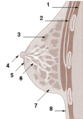 Diagram of breast anatomy

Sponsored Health Resource

W8MD Weight Loss, Sleep & MedSpa
Looking for physician-supervised weight loss, semaglutide, tirzepatide, or GLP-1 receptor agonist options? W8MD helps eligible patients in New York City, Brooklyn, New Jersey, Connecticut, Pennsylvania, Delaware, and greater Philadelphia with medical weight loss, sleep medicine, and long-term maintenance support.
GLP-1 specials: Affordable GLP-1 injections NYC and Philadelphia starting from $29.99/week and up for semaglutide with insurance accepted for qualifying visits, and $45/week and up for tirzepatide with insurance accepted for qualifying visits. Self-pay options start from $59.99/week and up for semaglutide and $69.99/week and up for tirzepatide.
Medical weight loss NYC | Affordable GLP-1 injections NYC | Budget GLP-1 weight loss shots Philadelphia | New Jersey medical weight loss | NYC medical weight loss | Philadelphia medical weight loss | Sleep clinic NYC | W8MD's Philadelphia GLP-1 doctor | Weight loss prescriptions NYC
Book a W8MD appointment · View GLP-1 specials
Paid promotional message. Eligibility, pricing, insurance coverage, medication availability, and results vary. Medical evaluation required.

Medical Disclaimer: WikiMD is for informational purposes only and is not a substitute for professional medical advice. Content may be inaccurate or outdated and should not be used for diagnosis or treatment. Always consult your healthcare provider for medical decisions. Verify information with trusted sources such as CDC.gov and NIH.gov. By using this site, you agree that WikiMD is not liable for any outcomes related to its content. See full disclaimer.
Credits:Most images are courtesy of Wikimedia commons, and templates, categories Wikipedia, licensed under CC BY SA or similar.
Translate page: - East Asian
中文,
日本,
한국어,
South Asian
हिन्दी,
தமிழ்,
తెలుగు,
Urdu,
ಕನ್ನಡ,
Southeast Asian
Indonesian,
Vietnamese,
Thai,
မြန်မာဘာသာ,
বাংলা
European
español,
Deutsch,
français,
Greek,
português do Brasil,
polski,
română,
русский,
Nederlands,
norsk,
svenska,
suomi,
Italian
Middle Eastern & African
عربى,
Turkish,
Persian,
Hebrew,
Afrikaans,
isiZulu,
Kiswahili,
Other
Bulgarian,
Hungarian,
Czech,
Swedish,
മലയാളം,
मराठी,
ਪੰਜਾਬੀ,
ગુજરાતી,
Portuguese,
Ukrainian

