Epidemiology of breast cancer
Breast cancer is a significant public health concern globally, affecting millions of individuals. It is the most common cancer among women worldwide, though it can also occur in men. The epidemiology of breast cancer involves studying the distribution, determinants, and frequency of the disease across different populations. This article delves into various aspects of breast cancer epidemiology, including incidence, risk factors, mortality rates, and preventive measures.
Incidence and Prevalence[edit]
Breast cancer incidence refers to the number of new cases diagnosed within a specific period, usually expressed per 100,000 individuals per year. The prevalence of breast cancer, on the other hand, indicates the total number of people living with the disease at a given time. The incidence and prevalence rates of breast cancer vary significantly across different regions, influenced by genetic, environmental, and lifestyle factors.
Risk Factors[edit]
Several risk factors contribute to the development of breast cancer. These can be categorized into non-modifiable and modifiable factors.
Non-Modifiable Risk Factors[edit]
- Genetics: Individuals with a family history of breast cancer, especially in first-degree relatives, have a higher risk. Specific genetic mutations, such as BRCA1 and BRCA2, significantly increase the risk.
- Age: The risk of developing breast cancer increases with age, with most cases diagnosed in women over 50 years.
- Gender: While breast cancer predominantly affects women, men can also develop the disease, albeit at a much lower rate.
- Early menstruation and late menopause: Women who start menstruating before age 12 or enter menopause after age 55 have an increased risk due to longer exposure to estrogen.
Modifiable Risk Factors[edit]
- Lifestyle factors: Obesity, physical inactivity, alcohol consumption, and smoking have been linked to an increased risk of breast cancer.
- Hormone replacement therapy (HRT): Long-term use of HRT, especially combined estrogen-progestogen therapy, has been associated with an increased risk.
- Reproductive history: Having children at a later age, not breastfeeding, and never having a full-term pregnancy can increase the risk.
Mortality Rates[edit]
Breast cancer mortality rates have declined in many countries, thanks to improved screening and treatment options. However, it remains one of the leading causes of cancer death among women globally. Mortality rates vary widely across different regions and populations, influenced by factors such as access to healthcare, socioeconomic status, and the prevalence of effective screening programs.
Prevention and Screening[edit]
Preventive measures and early detection through screening are crucial in reducing breast cancer incidence and mortality. Lifestyle modifications, such as maintaining a healthy weight, regular exercise, limiting alcohol intake, and avoiding smoking, can help lower the risk. Screening methods, including mammography and breast self-exams, can detect the disease at an early stage, when it is most treatable.
Conclusion[edit]
The epidemiology of breast cancer provides valuable insights into the distribution and determinants of the disease, guiding public health strategies for prevention, early detection, and treatment. Ongoing research and advancements in medical science continue to improve our understanding and management of breast cancer, aiming to reduce its impact on individuals and communities worldwide.
 | This medical article is a stub. You can help WikiMD by expanding the page. |
-
 World map showing breast cancer deaths according to WHO 2004 data
 -
 Most common cancers in females by occurrence
 -
 Most common cancers in females by mortality
 -
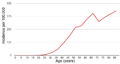 Breast cancer incidence by age in women in the UK (2006-2008)


Sponsored Health Resource

W8MD Weight Loss, Sleep & MedSpa
Looking for physician-supervised weight loss, semaglutide, tirzepatide, or GLP-1 receptor agonist options? W8MD helps eligible patients in New York City, Brooklyn, New Jersey, Connecticut, Pennsylvania, Delaware, and greater Philadelphia with medical weight loss, sleep medicine, and long-term maintenance support.
GLP-1 specials: Affordable GLP-1 injections NYC and Philadelphia starting from $29.99/week and up for semaglutide with insurance accepted for qualifying visits, and $45/week and up for tirzepatide with insurance accepted for qualifying visits. Self-pay options start from $59.99/week and up for semaglutide and $69.99/week and up for tirzepatide.
Medical weight loss NYC | Affordable GLP-1 injections NYC | Budget GLP-1 weight loss shots Philadelphia | New Jersey medical weight loss | NYC medical weight loss | Philadelphia medical weight loss | Sleep clinic NYC | W8MD's Philadelphia GLP-1 doctor | Weight loss prescriptions NYC
Book a W8MD appointment · View GLP-1 specials
Paid promotional message. Eligibility, pricing, insurance coverage, medication availability, and results vary. Medical evaluation required.

Medical Disclaimer: WikiMD is for informational purposes only and is not a substitute for professional medical advice. Content may be inaccurate or outdated and should not be used for diagnosis or treatment. Always consult your healthcare provider for medical decisions. Verify information with trusted sources such as CDC.gov and NIH.gov. By using this site, you agree that WikiMD is not liable for any outcomes related to its content. See full disclaimer.
Credits:Most images are courtesy of Wikimedia commons, and templates, categories Wikipedia, licensed under CC BY SA or similar.
Translate page: - East Asian
中文,
日本,
한국어,
South Asian
हिन्दी,
தமிழ்,
తెలుగు,
Urdu,
ಕನ್ನಡ,
Southeast Asian
Indonesian,
Vietnamese,
Thai,
မြန်မာဘာသာ,
বাংলা
European
español,
Deutsch,
français,
Greek,
português do Brasil,
polski,
română,
русский,
Nederlands,
norsk,
svenska,
suomi,
Italian
Middle Eastern & African
عربى,
Turkish,
Persian,
Hebrew,
Afrikaans,
isiZulu,
Kiswahili,
Other
Bulgarian,
Hungarian,
Czech,
Swedish,
മലയാളം,
मराठी,
ਪੰਜਾਬੀ,
ગુજરાતી,
Portuguese,
Ukrainian

