1,4-Dioxane
A heterocyclic organic compound
| Chemical Compound | |
|---|---|
| Identifiers | |
| CAS Number | |
| PubChem CID | |
| ChemSpider ID | |
| UNII | |
| ChEBI | |
| ChEMBL | |
| Properties | |
| Chemical Formula | |
| Molar Mass | |
| Appearance | |
| Density | |
| Melting Point | |
| Boiling Point | |
| Hazards | |
| GHS Pictograms | [[File:|50px]] |
| GHS Signal Word | |
| GHS Hazard Statements | |
| NFPA 704 | [[File:|50px]] |
| References | |
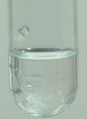
1,4-Dioxane is a heterocyclic compound classified as an ether. It is a colorless liquid with a faint sweet odor similar to that of diethyl ether.
Structure and properties[edit]
1,4-Dioxane is a six-membered ring containing two oxygen atoms opposite each other in the ring. It is one of the three isomers of dioxane, the others being 1,2-dioxane and 1,3-dioxane. The presence of the oxygen atoms in the ring makes it an ether, and it is often used as a solvent due to its ability to dissolve both polar and nonpolar compounds.
Production[edit]
1,4-Dioxane is typically produced by the acid-catalyzed dehydration of ethylene glycol. This process involves the removal of water molecules from ethylene glycol, resulting in the formation of the dioxane ring.
Uses[edit]
1,4-Dioxane is primarily used as a solvent in the manufacturing of other chemicals. It is also used in the formulation of cosmetics, detergents, and shampoos. Due to its solvent properties, it is used in laboratory settings for various chemical reactions and extractions.
Health and safety[edit]
1,4-Dioxane is considered a potential carcinogen and poses health risks if inhaled or absorbed through the skin. It is important to handle it with care, using appropriate personal protective equipment and working in well-ventilated areas.
Environmental impact[edit]
1,4-Dioxane is a contaminant of concern in groundwater and drinking water due to its persistence and mobility in the environment. It is resistant to biodegradation, making it a challenge to remove from contaminated sites.
Related pages[edit]
-
 1,4-Dioxane structure
 -
Dioxane isomers
-
Binary phase diagram of dioxane-water


Medical Disclaimer: WikiMD is for informational purposes only and is not a substitute for professional medical advice. Content may be inaccurate or outdated and should not be used for diagnosis or treatment. Always consult your healthcare provider for medical decisions. Verify information with trusted sources such as CDC.gov and NIH.gov. By using this site, you agree that WikiMD is not liable for any outcomes related to its content. See full disclaimer.
Credits:Most images are courtesy of Wikimedia commons, and templates, categories Wikipedia, licensed under CC BY SA or similar.
Translate page: - East Asian
中文,
日本,
한국어,
South Asian
हिन्दी,
தமிழ்,
తెలుగు,
Urdu,
ಕನ್ನಡ,
Southeast Asian
Indonesian,
Vietnamese,
Thai,
မြန်မာဘာသာ,
বাংলা
European
español,
Deutsch,
français,
Greek,
português do Brasil,
polski,
română,
русский,
Nederlands,
norsk,
svenska,
suomi,
Italian
Middle Eastern & African
عربى,
Turkish,
Persian,
Hebrew,
Afrikaans,
isiZulu,
Kiswahili,
Other
Bulgarian,
Hungarian,
Czech,
Swedish,
മലയാളം,
मराठी,
ਪੰਜਾਬੀ,
ગુજરાતી,
Portuguese,
Ukrainian


