Lemon basil
Lemon basil (Ocimum basilicum var. citriodorum), also known as lemon basil or citrus basil, is a hybrid herb in the family Lamiaceae. It is a cross between basil (Ocimum basilicum) and African basil (Ocimum americanum).
Description[edit]
Lemon basil is a small annual herb that grows up to 20–40 cm tall. It has light green leaves which are similar to basil leaves, but narrower. The leaves have a strong lemony scent due to a higher concentration of citral, a compound found in several plants including lemons and other citrus fruits.
Cultivation[edit]
Lemon basil thrives in warm, sunny conditions and well-drained soil. It is often grown in herb gardens and is popular in Southeast Asian cuisine, particularly in Indonesia, Laos, Cambodia, and Thailand.
Culinary uses[edit]
Lemon basil is used in a variety of dishes due to its unique flavor and aroma. It is often used in salads, marinades, desserts, and teas. In Southeast Asian cuisine, it is commonly used in soups, stews, and stir-fry dishes.
Medicinal uses[edit]
In traditional medicine, lemon basil is used for its supposed digestive and anti-inflammatory properties. However, scientific evidence to support these claims is limited.
See also[edit]

-
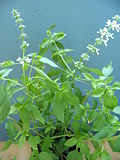 Lemon_basil

Ad. Transform your life with W8MD's
GLP-1 weight loss injections special from $29.99 with insurance
|
WikiMD Medical Encyclopedia |
Medical Disclaimer: WikiMD is for informational purposes only and is not a substitute for professional medical advice. Content may be inaccurate or outdated and should not be used for diagnosis or treatment. Always consult your healthcare provider for medical decisions. Verify information with trusted sources such as CDC.gov and NIH.gov. By using this site, you agree that WikiMD is not liable for any outcomes related to its content. See full disclaimer.
Credits:Most images are courtesy of Wikimedia commons, and templates, categories Wikipedia, licensed under CC BY SA or similar.
Translate this page: - East Asian
中文,
日本,
한국어,
South Asian
हिन्दी,
தமிழ்,
తెలుగు,
Urdu,
ಕನ್ನಡ,
Southeast Asian
Indonesian,
Vietnamese,
Thai,
မြန်မာဘာသာ,
বাংলা
European
español,
Deutsch,
français,
Greek,
português do Brasil,
polski,
română,
русский,
Nederlands,
norsk,
svenska,
suomi,
Italian
Middle Eastern & African
عربى,
Turkish,
Persian,
Hebrew,
Afrikaans,
isiZulu,
Kiswahili,
Other
Bulgarian,
Hungarian,
Czech,
Swedish,
മലയാളം,
मराठी,
ਪੰਜਾਬੀ,
ગુજરાતી,
Portuguese,
Ukrainian
