Lefetamine
Lefetamine is a drug that belongs to the class of stimulants and analgesics. It was first synthesized in the 1940s and has been used in the treatment of various medical conditions, including pain and narcolepsy. However, due to its potential for abuse and addiction, its use is now highly regulated.
History[edit]
Lefetamine was first synthesized in the 1940s by the Japanese company Dainippon Pharmaceutical. It was initially used as an analgesic and stimulant, but its use was later expanded to include the treatment of narcolepsy and other sleep disorders.
Pharmacology[edit]
Lefetamine acts as a norepinephrine-dopamine releasing agent (NDRA), which means it increases the levels of these neurotransmitters in the brain. This results in increased alertness, energy, and pain relief. However, it also has the potential to cause addiction and other serious side effects.
Medical uses[edit]
Lefetamine has been used in the treatment of various medical conditions, including pain and narcolepsy. However, due to its potential for abuse and addiction, its use is now highly regulated.
Side effects[edit]
The side effects of lefetamine can include insomnia, anxiety, agitation, and psychosis. In severe cases, it can also cause cardiovascular problems, such as hypertension and tachycardia.
Legal status[edit]
Lefetamine is a controlled substance in many countries, including the United States and the United Kingdom. It is classified as a Schedule II drug in the United States, which means it has a high potential for abuse and addiction.
See also[edit]
 | This medical article is a stub. You can help WikiMD by expanding the page. |
-
 Lefetamine
 -
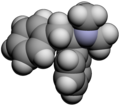 Lefetamine 3D


Medical Disclaimer: WikiMD is for informational purposes only and is not a substitute for professional medical advice. Content may be inaccurate or outdated and should not be used for diagnosis or treatment. Always consult your healthcare provider for medical decisions. Verify information with trusted sources such as CDC.gov and NIH.gov. By using this site, you agree that WikiMD is not liable for any outcomes related to its content. See full disclaimer.
Credits:Most images are courtesy of Wikimedia commons, and templates, categories Wikipedia, licensed under CC BY SA or similar.
Translate this page: - East Asian
中文,
日本,
한국어,
South Asian
हिन्दी,
தமிழ்,
తెలుగు,
Urdu,
ಕನ್ನಡ,
Southeast Asian
Indonesian,
Vietnamese,
Thai,
မြန်မာဘာသာ,
বাংলা
European
español,
Deutsch,
français,
Greek,
português do Brasil,
polski,
română,
русский,
Nederlands,
norsk,
svenska,
suomi,
Italian
Middle Eastern & African
عربى,
Turkish,
Persian,
Hebrew,
Afrikaans,
isiZulu,
Kiswahili,
Other
Bulgarian,
Hungarian,
Czech,
Swedish,
മലയാളം,
मराठी,
ਪੰਜਾਬੀ,
ગુજરાતી,
Portuguese,
Ukrainian
