Crotylsarin
Crotylsarin (also known as O-Isobutyl S-2-(N,N-diethylaminoethyl) methylphosphonothioate) is a lethal organophosphorus compound that is structurally related to the nerve gas sarin. It is a potent acetylcholinesterase inhibitor, which means it prevents the breakdown of acetylcholine in the body, leading to a build-up of this neurotransmitter and causing overstimulation of the muscles and glands.
History[edit]
Crotylsarin was first synthesized in the mid-20th century as part of a series of organophosphorus compounds with potential for use as chemical warfare agents. Its lethal effects were quickly recognized, and it was classified as a nerve gas due to its mechanism of action.
Structure and Properties[edit]
Crotylsarin is a liquid at room temperature and has a slightly fruity odor. It is highly volatile, which means it can easily evaporate and be inhaled. Its chemical formula is C9H20NO2PS, and it has a molecular weight of 247.31 g/mol.
Mechanism of Action[edit]
Crotylsarin inhibits the enzyme acetylcholinesterase, which is responsible for breaking down the neurotransmitter acetylcholine in the body. When acetylcholinesterase is inhibited, acetylcholine accumulates in the body, leading to overstimulation of the muscles and glands. This can cause a range of symptoms, from mild discomfort to severe respiratory distress and death.
Symptoms of Exposure[edit]
Exposure to crotylsarin can cause a range of symptoms, depending on the dose and route of exposure. These can include difficulty breathing, blurred vision, drooling, excessive sweating, nausea, vomiting, diarrhea, and seizures. In severe cases, exposure can lead to respiratory failure and death.
Treatment[edit]
Treatment for crotylsarin exposure involves removing the victim from the source of exposure, decontaminating their skin and clothing, and administering antidotes such as atropine and pralidoxime. These drugs work by blocking the effects of acetylcholine and reactivating acetylcholinesterase, respectively.
See Also[edit]
This article is a Chemical compound-related stub. You can help WikiMD by expanding it!
-
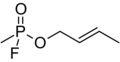 Crotylsarin structure

Ad. Transform your health with W8MD Weight Loss, Sleep & MedSpa

Tired of being overweight?
Special offer:
Budget GLP-1 weight loss medications
- Semaglutide starting from $29.99/week and up with insurance for visit of $59.99 and up per week self pay.
- Tirzepatide starting from $45.00/week and up (dose dependent) or $69.99/week and up self pay
✔ Same-week appointments, evenings & weekends
Learn more:
- GLP-1 weight loss clinic NYC
- W8MD's NYC medical weight loss
- W8MD Philadelphia GLP-1 shots
- Philadelphia GLP-1 injections
- Affordable GLP-1 shots NYC
|
WikiMD Medical Encyclopedia |
Medical Disclaimer: WikiMD is for informational purposes only and is not a substitute for professional medical advice. Content may be inaccurate or outdated and should not be used for diagnosis or treatment. Always consult your healthcare provider for medical decisions. Verify information with trusted sources such as CDC.gov and NIH.gov. By using this site, you agree that WikiMD is not liable for any outcomes related to its content. See full disclaimer.
Credits:Most images are courtesy of Wikimedia commons, and templates, categories Wikipedia, licensed under CC BY SA or similar.
Translate this page: - East Asian
中文,
日本,
한국어,
South Asian
हिन्दी,
தமிழ்,
తెలుగు,
Urdu,
ಕನ್ನಡ,
Southeast Asian
Indonesian,
Vietnamese,
Thai,
မြန်မာဘာသာ,
বাংলা
European
español,
Deutsch,
français,
Greek,
português do Brasil,
polski,
română,
русский,
Nederlands,
norsk,
svenska,
suomi,
Italian
Middle Eastern & African
عربى,
Turkish,
Persian,
Hebrew,
Afrikaans,
isiZulu,
Kiswahili,
Other
Bulgarian,
Hungarian,
Czech,
Swedish,
മലയാളം,
मराठी,
ਪੰਜਾਬੀ,
ગુજરાતી,
Portuguese,
Ukrainian
