Vesicle-associated membrane protein
Vesicle-associated membrane protein (VAMP) is a type of protein that plays a critical role in the vesicle transport systems within cells. These proteins are part of the SNARE complex, which is essential for the fusion of vesicles with their target membranes, a key process in intracellular trafficking, neurotransmitter release, and hormone secretion.
Function[edit]
VAMPs, also known as synaptobrevins, are involved in the docking and fusion of synaptic vesicles with the plasma membrane of the neuron, leading to the release of neurotransmitters into the synaptic cleft. This process is crucial for the propagation of nerve impulses between neurons or from neurons to muscles. VAMPs interact with syntaxins and SNAP-25 proteins to form the SNARE complex, facilitating membrane fusion through a mechanism that involves the coiling of SNARE proteins to bring the membranes close together.
Types[edit]
There are several types of VAMPs, each with specific functions and locations within the cell. For example, VAMP1 and VAMP2 are primarily found in neurons and are directly involved in neurotransmission. VAMP3, on the other hand, is more involved in the endocytic recycling process. The diversity of VAMPs allows for the specificity of vesicle targeting and fusion, ensuring that vesicles fuse with the correct membrane compartment.
Clinical Significance[edit]
Alterations in VAMP function can lead to various diseases. For instance, botulinum and tetanus toxins target SNARE proteins, including VAMPs, to disrupt neurotransmitter release, leading to botulism and tetanus, respectively. Furthermore, research has implicated abnormalities in vesicle transport mechanisms, including those involving VAMPs, in neurological disorders such as Alzheimer's disease and schizophrenia.
Research[edit]
Ongoing research aims to further elucidate the exact mechanisms by which VAMPs and other SNARE proteins mediate vesicle fusion. Understanding these processes at a molecular level is crucial for developing targeted therapies for diseases caused by dysfunctions in vesicle transport.
.svg)
This article is a biochemistry stub. You can help WikiMD by expanding it!
-
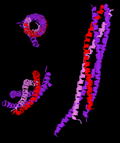 Core SNARE Complex

Ad. Transform your health with W8MD Weight Loss, Sleep & MedSpa

Tired of being overweight?
Special offer:
Budget GLP-1 weight loss medications
- Semaglutide starting from $29.99/week and up with insurance for visit of $59.99 and up per week self pay.
- Tirzepatide starting from $45.00/week and up (dose dependent) or $69.99/week and up self pay
✔ Same-week appointments, evenings & weekends
Learn more:
- GLP-1 weight loss clinic NYC
- W8MD's NYC medical weight loss
- W8MD Philadelphia GLP-1 shots
- Philadelphia GLP-1 injections
- Affordable GLP-1 shots NYC
|
WikiMD Medical Encyclopedia |
Medical Disclaimer: WikiMD is for informational purposes only and is not a substitute for professional medical advice. Content may be inaccurate or outdated and should not be used for diagnosis or treatment. Always consult your healthcare provider for medical decisions. Verify information with trusted sources such as CDC.gov and NIH.gov. By using this site, you agree that WikiMD is not liable for any outcomes related to its content. See full disclaimer.
Credits:Most images are courtesy of Wikimedia commons, and templates, categories Wikipedia, licensed under CC BY SA or similar.
Translate this page: - East Asian
中文,
日本,
한국어,
South Asian
हिन्दी,
தமிழ்,
తెలుగు,
Urdu,
ಕನ್ನಡ,
Southeast Asian
Indonesian,
Vietnamese,
Thai,
မြန်မာဘာသာ,
বাংলা
European
español,
Deutsch,
français,
Greek,
português do Brasil,
polski,
română,
русский,
Nederlands,
norsk,
svenska,
suomi,
Italian
Middle Eastern & African
عربى,
Turkish,
Persian,
Hebrew,
Afrikaans,
isiZulu,
Kiswahili,
Other
Bulgarian,
Hungarian,
Czech,
Swedish,
മലയാളം,
मराठी,
ਪੰਜਾਬੀ,
ગુજરાતી,
Portuguese,
Ukrainian
