Pax genes
Pax genes are a family of genes encoding transcription factors that play critical roles in the development of various tissues and organs in many animals. These genes are highly conserved across species, indicating their importance in the developmental processes. The Pax gene family is involved in regulating the expression of genes critical for cell differentiation, cell proliferation, and the developmental pathways that lead to the formation of various structures in the embryo.
Function
Pax genes are essential for the early stages of development in animals. They are known to be involved in the formation of the nervous system, eye development, and the development of other organs. For example, the Pax6 gene is crucial for eye and brain development, and mutations in this gene can lead to various eye disorders. Similarly, Pax2 is important for the development of the kidneys and the urogenital system. The role of Pax genes extends to the development of the ear, limbs, and central nervous system.
Classification
Pax genes are divided into four groups based on their structure and the presence of paired domains and homeodomains. These groups are:
- Pax1/Pax9
- Pax2/Pax5/Pax8
- Pax3/Pax7
- Pax4/Pax6
Each group is characterized by specific domains that enable the Pax proteins to bind to DNA and regulate gene expression. The paired domain is a conserved region found in all Pax proteins, while the homeodomain is present in some members of the family.
Genetic Disorders
Mutations in Pax genes have been linked to various genetic disorders. For example, mutations in Pax6 can lead to aniridia, a condition characterized by the absence of the iris in the eye. Mutations in Pax3 are associated with Waardenburg syndrome, a disorder that can cause deafness and changes in pigmentation. These examples highlight the critical role of Pax genes in normal development and the consequences of their malfunction.
Evolution
The conservation of Pax genes across different species underlines their fundamental role in development. Studies have shown that Pax genes originated in the common ancestor of all bilaterians, with subsequent duplications and diversifications leading to the variety of Pax genes observed in different species today. This evolutionary conservation underscores the essential functions of Pax genes in developmental processes.
Research and Clinical Significance
Research on Pax genes continues to uncover their roles in development and disease. Understanding the mechanisms by which Pax genes regulate development can lead to new therapeutic approaches for genetic disorders. Additionally, studying the function of Pax genes in various organisms can provide insights into the evolutionary aspects of development.

-
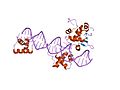 PDB 1mdm EBI

Ad. Transform your life with W8MD's
GLP-1 weight loss injections special from $29.99


W8MD Medical Weight Loss, Sleep and Medspa offers physician-supervised medical weight loss programs: NYC medical weight loss Philadelphia medical weight loss
Affordable GLP-1 Weight Loss ShotsAffordable GLP-1 Weight Loss Shots
Budget GLP-1 injections NYC (insurance & self-pay options) Popular treatments:
- Semaglutide starting from $29.99/week
- Tirzepatide starting from $45.00/week
✔ Most insurances accepted for visits ✔ Prior authorization support when eligible
Start your physician weight loss NYC journey today:
📍 NYC: Brooklyn weight loss center 📍 Philadelphia: Philadelphia weight loss center
📞 Call: 718-946-5500 (NYC) | 215-676-2334 (Philadelphia)
Tags: Affordable GLP1 weight loss NYC, Wegovy NYC, Zepbound NYC, Philadelphia medical weight loss


|
WikiMD Medical Encyclopedia |
Medical Disclaimer: WikiMD is not a substitute for professional medical advice. The information on WikiMD is provided as an information resource only, may be incorrect, outdated or misleading, and is not to be used or relied on for any diagnostic or treatment purposes. Please consult your health care provider before making any healthcare decisions or for guidance about a specific medical condition. WikiMD expressly disclaims responsibility, and shall have no liability, for any damages, loss, injury, or liability whatsoever suffered as a result of your reliance on the information contained in this site. By visiting this site you agree to the foregoing terms and conditions, which may from time to time be changed or supplemented by WikiMD. If you do not agree to the foregoing terms and conditions, you should not enter or use this site. See full disclaimer.
Credits:Most images are courtesy of Wikimedia commons, and templates, categories Wikipedia, licensed under CC BY SA or similar.
Translate this page: - East Asian
中文,
日本,
한국어,
South Asian
हिन्दी,
தமிழ்,
తెలుగు,
Urdu,
ಕನ್ನಡ,
Southeast Asian
Indonesian,
Vietnamese,
Thai,
မြန်မာဘာသာ,
বাংলা
European
español,
Deutsch,
français,
Greek,
português do Brasil,
polski,
română,
русский,
Nederlands,
norsk,
svenska,
suomi,
Italian
Middle Eastern & African
عربى,
Turkish,
Persian,
Hebrew,
Afrikaans,
isiZulu,
Kiswahili,
Other
Bulgarian,
Hungarian,
Czech,
Swedish,
മലയാളം,
मराठी,
ਪੰਜਾਬੀ,
ગુજરાતી,
Portuguese,
Ukrainian
