Smoked meat
A comprehensive overview of smoked meat, its preparation, types, and cultural significance
Overview[edit]
Smoked meat is a method of preparing red meat, white meat, and seafood which originated in prehistory. It is one of the oldest food preservation techniques, combining the effects of salting and smoking to extend the shelf life of perishable food items. The process involves exposing the meat to smoke from burning or smoldering materials, typically wood.
History[edit]
The practice of smoking meat dates back thousands of years. Early humans discovered that hanging meat over a fire not only cooked it but also preserved it. This was particularly important before the advent of refrigeration. Over time, different cultures developed their own methods and flavors, leading to a rich diversity of smoked meat traditions around the world.
Preparation[edit]
The preparation of smoked meat involves several steps:
Curing[edit]
Before smoking, meat is often cured with salt, sugar, and spices. This process draws out moisture and adds flavor. Curing can be done using a dry rub or a wet brine.
Smoking[edit]
The smoking process can be hot or cold:
- Hot smoking cooks the meat while infusing it with smoke flavor. It is done at temperatures of 52 to 80 °C (126 to 176 °F).
- Cold smoking imparts flavor without cooking the meat, typically done at temperatures below 30 °C (86 °F).
Wood Selection[edit]
The type of wood used in smoking greatly affects the flavor of the meat. Common woods include hickory, mesquite, apple, and cherry. Each type of wood imparts a unique flavor profile.
Types of Smoked Meat[edit]
Pastrami[edit]
Pastrami is a popular smoked meat, particularly in Jewish cuisine. It is typically made from beef brisket, which is cured, seasoned, smoked, and steamed.
Bacon[edit]
Bacon is a type of smoked pork belly that is cured and then smoked. It is a staple in many Western diets.
Smoked Salmon[edit]
Smoked salmon is a delicacy made by curing and smoking salmon. It is often served on bagels with cream cheese.
Barbecue[edit]
Barbecue involves smoking meat, such as ribs or brisket, over a long period at low temperatures. It is a popular cooking method in the Southern United States.
Cultural Significance[edit]
Smoked meat holds cultural significance in many regions:
- In Montreal, smoked meat sandwiches are a culinary icon.
- In the Southern United States, barbecue is not just a cooking method but a social event.
- In Scandinavia, smoked fish is a traditional food, often served during holidays.
Health Considerations[edit]
While smoked meat is flavorful, it is important to consume it in moderation. The smoking process can produce polycyclic aromatic hydrocarbons (PAHs) and nitrosamines, which are potential carcinogens. Choosing lean cuts and using modern smoking techniques can reduce these risks.
Related Pages[edit]
Smoked_meat[edit]
-
 O Piornedo, Donís, Cervantes
 -
 Chambre de boucanage
 -
 Smoking fish near Dakar, Sénégal
 -
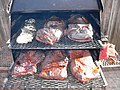 Smoking Meat
 -
 American Bacon
 -
 Country ham
 -
 Smoking Finnan Haddie
 -
 枯本背節
枯本背節


_(2290515874).jpg)


.jpg)
Ad. Transform your life with W8MD's
GLP-1 weight loss injections special from $29.99


W8MD Medical Weight Loss, Sleep and Medspa offers physician-supervised medical weight loss programs: NYC medical weight loss Philadelphia medical weight loss
Affordable GLP-1 Weight Loss ShotsAffordable GLP-1 Weight Loss Shots
Budget GLP-1 injections NYC (insurance & self-pay options) Popular treatments:
- Semaglutide starting from $29.99/week
- Tirzepatide starting from $45.00/week
✔ Most insurances accepted for visits ✔ Prior authorization support when eligible
Start your physician weight loss NYC journey today:
📍 NYC: Brooklyn weight loss center 📍 Philadelphia: Philadelphia weight loss center
📞 Call: 718-946-5500 (NYC) | 215-676-2334 (Philadelphia)
Tags: Affordable GLP1 weight loss NYC, Wegovy NYC, Zepbound NYC, Philadelphia medical weight loss


|
WikiMD Medical Encyclopedia |
Medical Disclaimer: WikiMD is not a substitute for professional medical advice. The information on WikiMD is provided as an information resource only, may be incorrect, outdated or misleading, and is not to be used or relied on for any diagnostic or treatment purposes. Please consult your health care provider before making any healthcare decisions or for guidance about a specific medical condition. WikiMD expressly disclaims responsibility, and shall have no liability, for any damages, loss, injury, or liability whatsoever suffered as a result of your reliance on the information contained in this site. By visiting this site you agree to the foregoing terms and conditions, which may from time to time be changed or supplemented by WikiMD. If you do not agree to the foregoing terms and conditions, you should not enter or use this site. See full disclaimer.
Credits:Most images are courtesy of Wikimedia commons, and templates, categories Wikipedia, licensed under CC BY SA or similar.
Translate this page: - East Asian
中文,
日本,
한국어,
South Asian
हिन्दी,
தமிழ்,
తెలుగు,
Urdu,
ಕನ್ನಡ,
Southeast Asian
Indonesian,
Vietnamese,
Thai,
မြန်မာဘာသာ,
বাংলা
European
español,
Deutsch,
français,
Greek,
português do Brasil,
polski,
română,
русский,
Nederlands,
norsk,
svenska,
suomi,
Italian
Middle Eastern & African
عربى,
Turkish,
Persian,
Hebrew,
Afrikaans,
isiZulu,
Kiswahili,
Other
Bulgarian,
Hungarian,
Czech,
Swedish,
മലയാളം,
मराठी,
ਪੰਜਾਬੀ,
ગુજરાતી,
Portuguese,
Ukrainian
