List of basil cultivars
Basil is a culinary herb prominently featured in various cuisines worldwide. There are numerous Basil cultivars that have been cultivated for their unique characteristics. This article provides a comprehensive list of basil cultivars.
List of Basil Cultivars[edit]
1. Sweet Basil - The most common type of basil, known for its sweet and mild flavor.
2. Genovese Basil - A variety of sweet basil that originates from Italy. It is a key ingredient in traditional Pesto.
3. Thai Basil - A basil cultivar with a strong anise flavor, commonly used in Thai cuisine.
4. Holy Basil - Also known as Tulsi, it is a sacred plant in Hinduism and is used in Ayurvedic medicine.
5. Lemon Basil - A basil cultivar with a strong lemon aroma, used in Indonesian and Lao cuisines.
6. Cinnamon Basil - Known for its spicy, cinnamon-like flavor, it is used in Mexican cuisine.
7. Purple Basil - A basil cultivar with dark purple leaves, it has a stronger flavor than sweet basil.
8. African Blue Basil - A hybrid basil cultivar known for its camphor scent and purple flowers.
9. Greek Basil - A basil cultivar with small leaves and a strong flavor, used in Greek cuisine.
10. Lettuce Leaf Basil - Known for its large, crinkly leaves, it is used in salads and wraps.
See Also[edit]
References[edit]
<references />
This is a non-exhaustive food and drink related list.

List of basil cultivars[edit]
-
 Ocimum tenuiflorum
 -
 Basil
Basil -
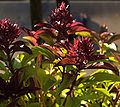 Thai basil flower
 -
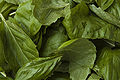 Basil leaves
 -
 Bush basil AKA manjerico


Ad. Transform your life with W8MD's
GLP-1 weight loss injections special from $29.99 with insurance
|
WikiMD Medical Encyclopedia |
Medical Disclaimer: WikiMD is for informational purposes only and is not a substitute for professional medical advice. Content may be inaccurate or outdated and should not be used for diagnosis or treatment. Always consult your healthcare provider for medical decisions. Verify information with trusted sources such as CDC.gov and NIH.gov. By using this site, you agree that WikiMD is not liable for any outcomes related to its content. See full disclaimer.
Credits:Most images are courtesy of Wikimedia commons, and templates, categories Wikipedia, licensed under CC BY SA or similar.
Translate this page: - East Asian
中文,
日本,
한국어,
South Asian
हिन्दी,
தமிழ்,
తెలుగు,
Urdu,
ಕನ್ನಡ,
Southeast Asian
Indonesian,
Vietnamese,
Thai,
မြန်မာဘာသာ,
বাংলা
European
español,
Deutsch,
français,
Greek,
português do Brasil,
polski,
română,
русский,
Nederlands,
norsk,
svenska,
suomi,
Italian
Middle Eastern & African
عربى,
Turkish,
Persian,
Hebrew,
Afrikaans,
isiZulu,
Kiswahili,
Other
Bulgarian,
Hungarian,
Czech,
Swedish,
മലയാളം,
मराठी,
ਪੰਜਾਬੀ,
ગુજરાતી,
Portuguese,
Ukrainian
