Bamba (snack)
Bamba is a popular snack food produced in Israel. It is a peanut butter-flavored puffed maize product, similar to cheese puffs in texture. Bamba is one of the leading snack foods produced and sold in Israel. It has been manufactured by the Osem corporation in Holon, Israel, since 1964.
History[edit]
Bamba was first produced by Osem in 1964. Initially, the snack was not peanut flavored, but rather flavored with a more generic, savory taste. However, in 1966, the company decided to change the flavor to peanut butter, which proved to be a successful decision as the snack quickly gained popularity.
Production[edit]
Bamba is made from peanut butter, corn, palm oil, and salt. The process of making Bamba is similar to that of other puffed grain snacks. The corn grits are popped under high pressure, turning them into long ropes. These ropes are then cut into the desired length, and then oven-baked. After baking, they are moved to a rotating drum, where hot air is used to evenly distribute the peanut butter coating.
Nutritional Information[edit]
Bamba is high in both fat and sodium, but it is also a good source of protein due to the peanut butter. It is also gluten-free, making it a popular snack for those with celiac disease or gluten intolerance.
Cultural Impact[edit]
Bamba has become a significant part of Israeli culture. It is often used in studies to show the impact of early exposure to potential allergens, such as peanuts, in reducing the incidence of allergies. The "Bamba Baby" - a baby depicted on the packaging of the snack - has become an iconic figure in Israeli pop culture.
See Also[edit]
This article is a Israel-cuisine stub. You can help WikiMD by expanding it!

-
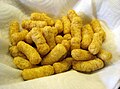 Bamba snack
 -
Bag of Bamba

Ad. Transform your life with W8MD's
GLP-1 weight loss injections special from $29.99 with insurance
|
WikiMD Medical Encyclopedia |
Medical Disclaimer: WikiMD is for informational purposes only and is not a substitute for professional medical advice. Content may be inaccurate or outdated and should not be used for diagnosis or treatment. Always consult your healthcare provider for medical decisions. Verify information with trusted sources such as CDC.gov and NIH.gov. By using this site, you agree that WikiMD is not liable for any outcomes related to its content. See full disclaimer.
Credits:Most images are courtesy of Wikimedia commons, and templates, categories Wikipedia, licensed under CC BY SA or similar.
Translate this page: - East Asian
中文,
日本,
한국어,
South Asian
हिन्दी,
தமிழ்,
తెలుగు,
Urdu,
ಕನ್ನಡ,
Southeast Asian
Indonesian,
Vietnamese,
Thai,
မြန်မာဘာသာ,
বাংলা
European
español,
Deutsch,
français,
Greek,
português do Brasil,
polski,
română,
русский,
Nederlands,
norsk,
svenska,
suomi,
Italian
Middle Eastern & African
عربى,
Turkish,
Persian,
Hebrew,
Afrikaans,
isiZulu,
Kiswahili,
Other
Bulgarian,
Hungarian,
Czech,
Swedish,
മലയാളം,
मराठी,
ਪੰਜਾਬੀ,
ગુજરાતી,
Portuguese,
Ukrainian

