Mineralogy
Mineralogy is a branch of Earth science that studies minerals, their crystal structure, chemical composition, physical properties, and the way they form and break down. It is a crucial field in the study of geology, materials science, and soil science.
History[edit]
The study of mineralogy dates back to ancient times. The Ancient Greeks and Ancient Romans, for example, both had a keen interest in minerals. However, it was not until the 19th century that mineralogy became a formalized science.
Branches of Mineralogy[edit]
Mineralogy can be divided into several sub-disciplines, including:
- Descriptive Mineralogy: This branch focuses on the description and classification of minerals.
- Chemical Mineralogy: This branch studies the chemical composition of minerals.
- Physical Mineralogy: This branch examines the physical properties of minerals.
- Optical Mineralogy: This branch uses light to study minerals.
- Environmental Mineralogy: This branch looks at the role minerals play in the environment.
Importance of Mineralogy[edit]
Mineralogy is important for a number of reasons. It helps us understand the Earth's history and the processes that have shaped it. It also plays a crucial role in the discovery and exploitation of mineral resources, and it contributes to the development of new materials and technologies.
See Also[edit]
References[edit]
<references />
 | |
|---|---|
 |
 |
Mineralogy[edit]
-
 Mineralogy between its other sciences around
 -
 Mohs mineralogy vol 2 plate 19
 -
 Moon Mineralogy Mapper left
 -
 Calcit Scalenoeder - Egremont, England
 -
 Aragonite redbrown crystals
 -
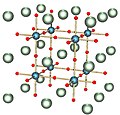 Perovskite
 -
 Portable Micro-X-ray fluorescence machine
 -
 CSIRO ScienceImage 1483 Olivine Adcumulate
 -
 Hanksite
 -
 Americana 1920 Mineralogy - Valuable Minerals
 -
 Mineralogy


Ad. Transform your life with W8MD's
GLP-1 weight loss injections special from $29.99 with insurance
|
WikiMD Medical Encyclopedia |
Medical Disclaimer: WikiMD is for informational purposes only and is not a substitute for professional medical advice. Content may be inaccurate or outdated and should not be used for diagnosis or treatment. Always consult your healthcare provider for medical decisions. Verify information with trusted sources such as CDC.gov and NIH.gov. By using this site, you agree that WikiMD is not liable for any outcomes related to its content. See full disclaimer.
Credits:Most images are courtesy of Wikimedia commons, and templates, categories Wikipedia, licensed under CC BY SA or similar.
Translate this page: - East Asian
中文,
日本,
한국어,
South Asian
हिन्दी,
தமிழ்,
తెలుగు,
Urdu,
ಕನ್ನಡ,
Southeast Asian
Indonesian,
Vietnamese,
Thai,
မြန်မာဘာသာ,
বাংলা
European
español,
Deutsch,
français,
Greek,
português do Brasil,
polski,
română,
русский,
Nederlands,
norsk,
svenska,
suomi,
Italian
Middle Eastern & African
عربى,
Turkish,
Persian,
Hebrew,
Afrikaans,
isiZulu,
Kiswahili,
Other
Bulgarian,
Hungarian,
Czech,
Swedish,
മലയാളം,
मराठी,
ਪੰਜਾਬੀ,
ગુજરાતી,
Portuguese,
Ukrainian
